
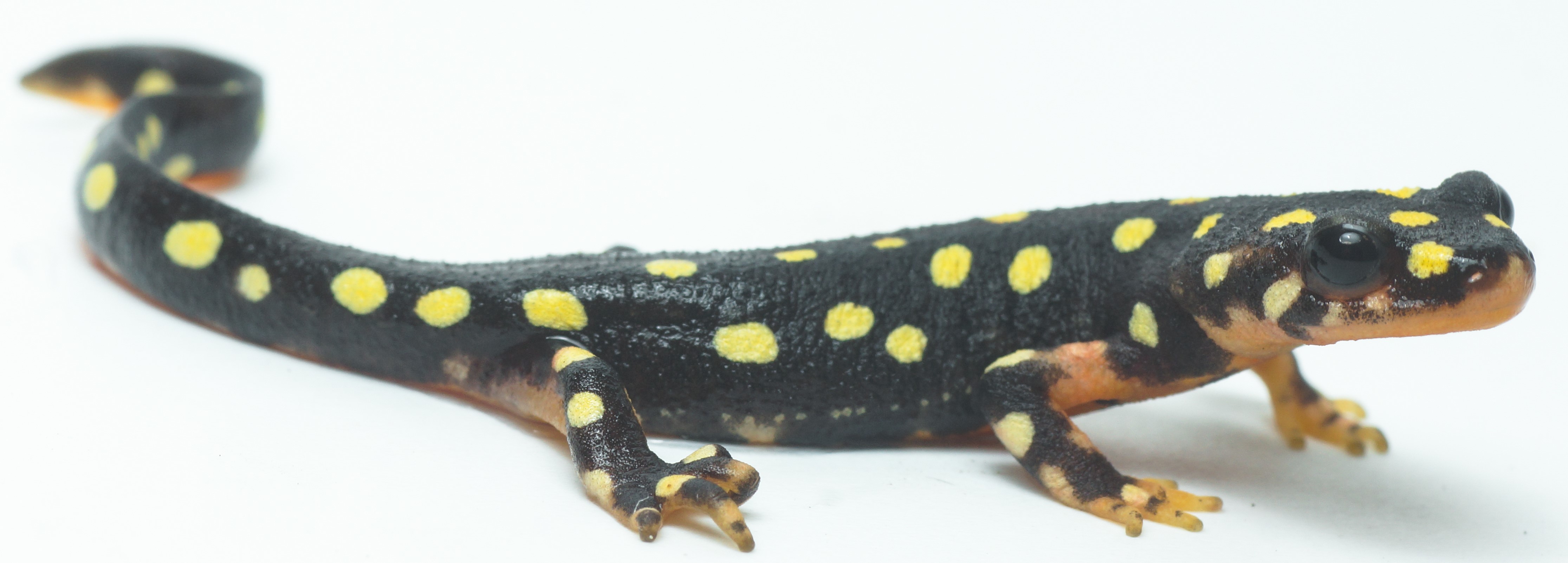
The Near Eastern newts of the genus Neurergus are spectacular salamanders that seem to lack a proper common name. Because many of the species have at one time or another been referred to as ‘something something mountain newt’, let’s go with mountain newts! The taxonomy and systematics of Neurergus newts are a bit of a mess. In a paper led by my former MSc student Stephanie Koster out in Molecular Phylogenetics and Evolution we sort out the situation. We make the case that several species that are sometimes treated as distinct species do not deserve this special status. On the other hand, N. kaiseri should definitely be split into two species. We also notice that the position of N. crocatus in the evolutionary tree differs, depending on which analysis is used. We propose that this is a consequence of gene flow between tree branches. Once again, the Triturus sequence capture protocol proves extremely useful in salamander systematics.
Reference: Koster, S., Polanen, R., Avcı, A., Bogaerts, S., Bozkurt, E., Goudarzi, F., Hemami, M.-R., Olgun, K., Pasmans, F., Steinfartz, S., Üzüm, N., de Visser, M.C., France, J., Theodoropoulos, A., Wielstra, B. (2025). Discordance between phylogenomic methods in Near Eastern mountain newts (Neurergus, Salamandridae). Molecular Phylogenetics and Evolution 211: 108386.


 Wielstra Lab