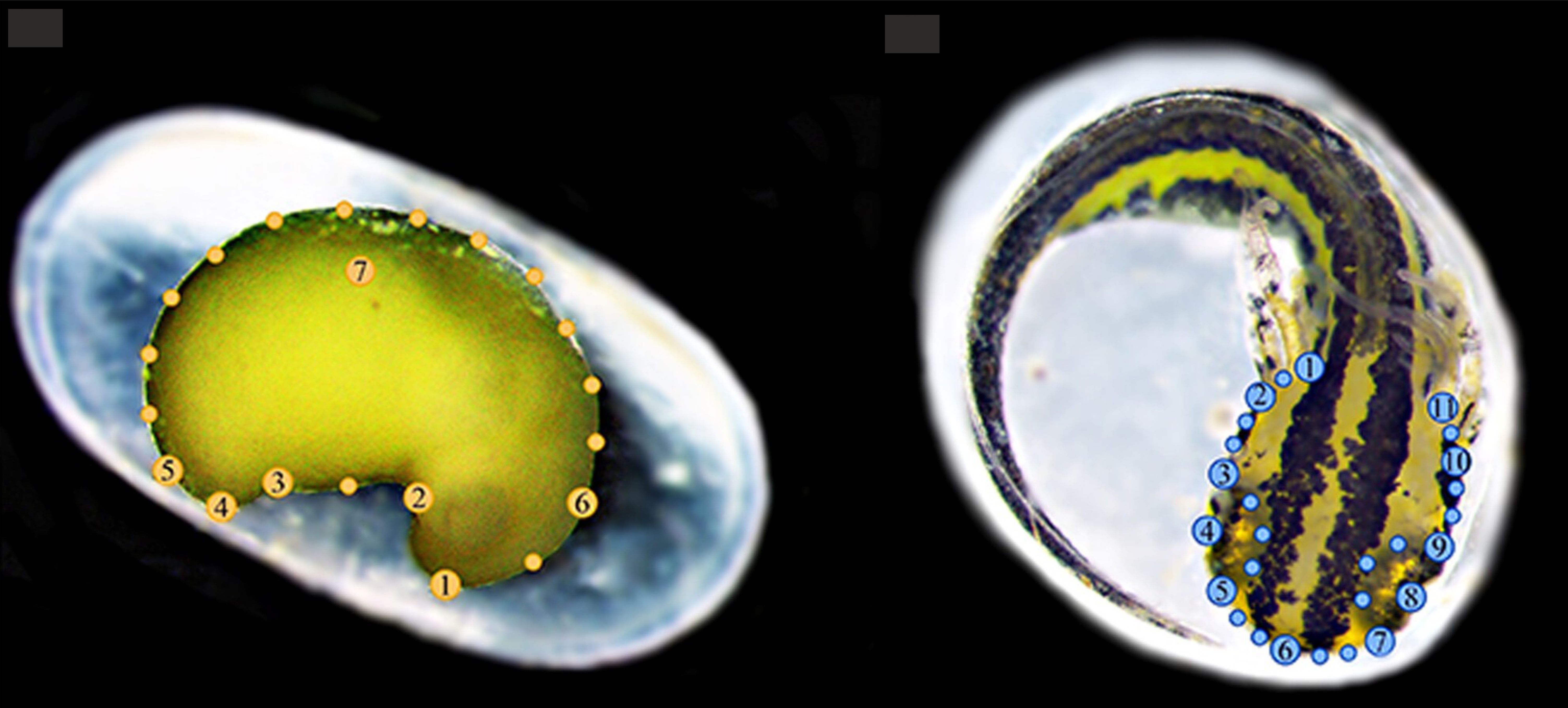
Roughly halfway embryonic development, half of Triturus embryos die inside their egg. In a new paper in Journal of Experimental Zoology Part B: Molecular and Developmental Evolution, we follow embryonic development and show that during one specific developmental stage, unimaginatively named “stage 23”, morphological variation in embryos becomes elevated. This reflects the onset of the developmental arrest, caused by the balanced lethal system, in those unfortunate embryos that are doomed to die. To understand how these embryos die exactly, we need to get a more detailed picture of embryonic development in Triturus.
This project has received funding from the European Research Council (ERC) under the European Union’s Horizon 2020 research and innovation program (Grant Agreement No. 802759) and from the Dutch Research Council – NWO (ENW‐M1 grant OCENW.M20.090). Triturus sample collection was supported by the Serbian Ministry of Science, Technological Development and Innovation (grants nos. 451-03-66/2024-01/200007, 451-03-65/2024-03/200178, 451-03-66/2024-03/200178).
Hybrid newts from Catalonia: a marbled back and crested belly
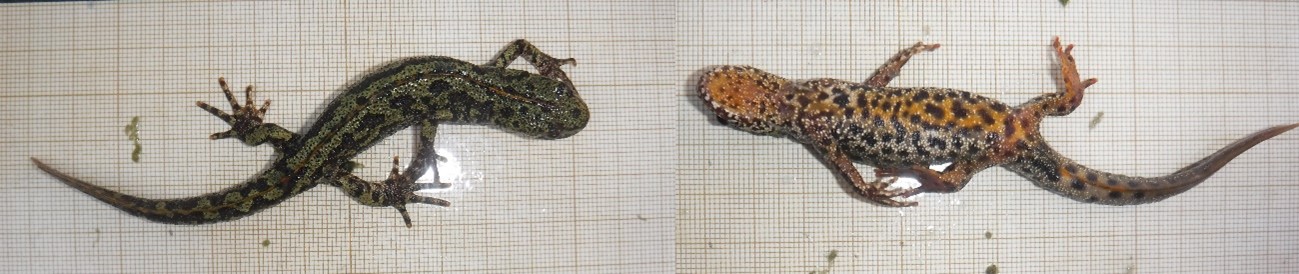
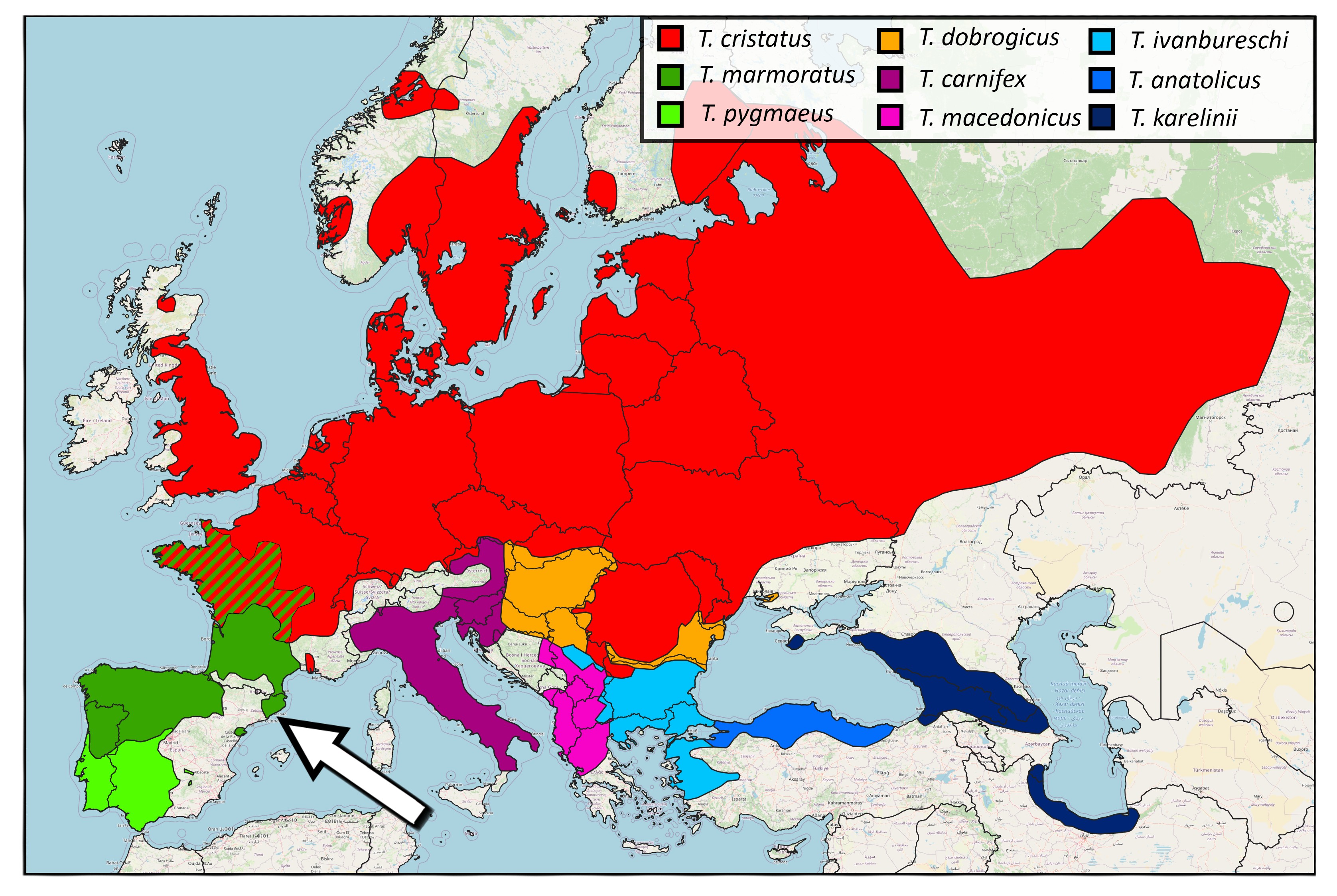
In nature, marbled and crested newts meet in France, where they manage to hybridize, despite being only distantly related. The resulting hybrid offspring are an evolutionary dead end: their fitness is practically zero. In Catalonia people have introduced the Anatolian crested newt inside the marbled newt range. Therefore, in addition to the typical threats associated with invasive species, such as competition and the spread of disease, anthropogenic hybridization should be taken into account as a conservation concern. In a paper in Global Ecology and Conservation, led by my PhD student Anagnostis Theodoropoulos, we determine genetic pollution risk in these newts.
The arrow shows where the Anatolian crested newt Triturus anatolicus, which naturally occurs in Türkiye, has been introduced inside the range of the marbled newt Triturus marmoratus
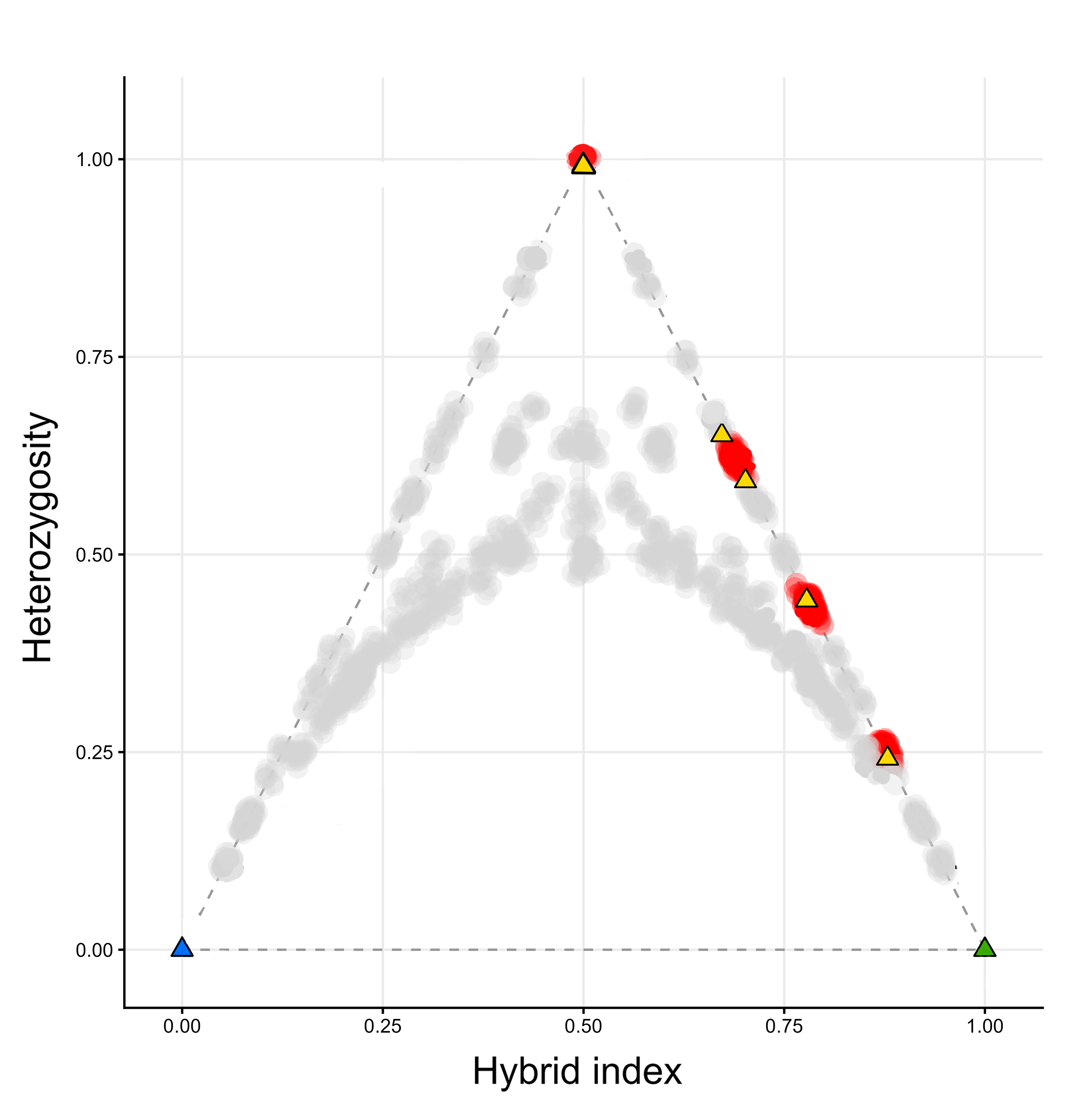
Compared to the natural hybrid zone in France, the frequency of hybridization in the human-made hybrid zone in Catalonia is considerably higher. Furthermore, the fitness of the resulting hybrids appears to be much higher than in the natural hybrid zone, because we observe a surprisingly high number of later-generation hybrids. Worryingly, all later-generation hybrids result from backcrossing towards the native marbled newt. This provides the conditions for gene flow from the invasive into the native species and we conclude that genetic pollution is a tangible risk in the Catalonian newt case. Fortunately, we caught this early.
The hybrid index is the fraction of marbled newt alleles and heterozygosity the fraction of genes for which both an Anatolian crested newt and a marbled newt allele are observed. Therefore, pure Anatolian crested and marbled newts are in the bottom left and right corners of the triangle, while their first-generation hybrids end up at the top corner. There are also four later-generation hybrids in another part of the triangle plot, worryingly all on the marbled newt side.
Reference: Theodoropoulos, A., Avcı, A., Fernández-Guiberteau, D., Ferran, A., Olgun, K., Üzüm, N., Carranza, S., Wielstra, B. (2026). Genetic pollution risk in newts at the far end of the speciation continuum. Global Ecology and Conservation 69: e04308.
This project has received funding from the Dutch Ministry of Education, Culture and Science (incentive grant) and the European Research Council (ERC) under the European Union’s Horizon 2020 research and innovation programme (Grant Agreement No. 802759)
DNA can teach us all kinds or things, but you do need to collect it first, before you are able to read it out. If you study for example hybridization between two species, you need to sample many individuals, from many populations. However, in principle you can also get a population-level sample from environmental DNA – the DNA that the members of a population shed in the environment. PhD student Daniel Zumel Gete shows proof of concept in a paper in Molecular Ecology Resources.
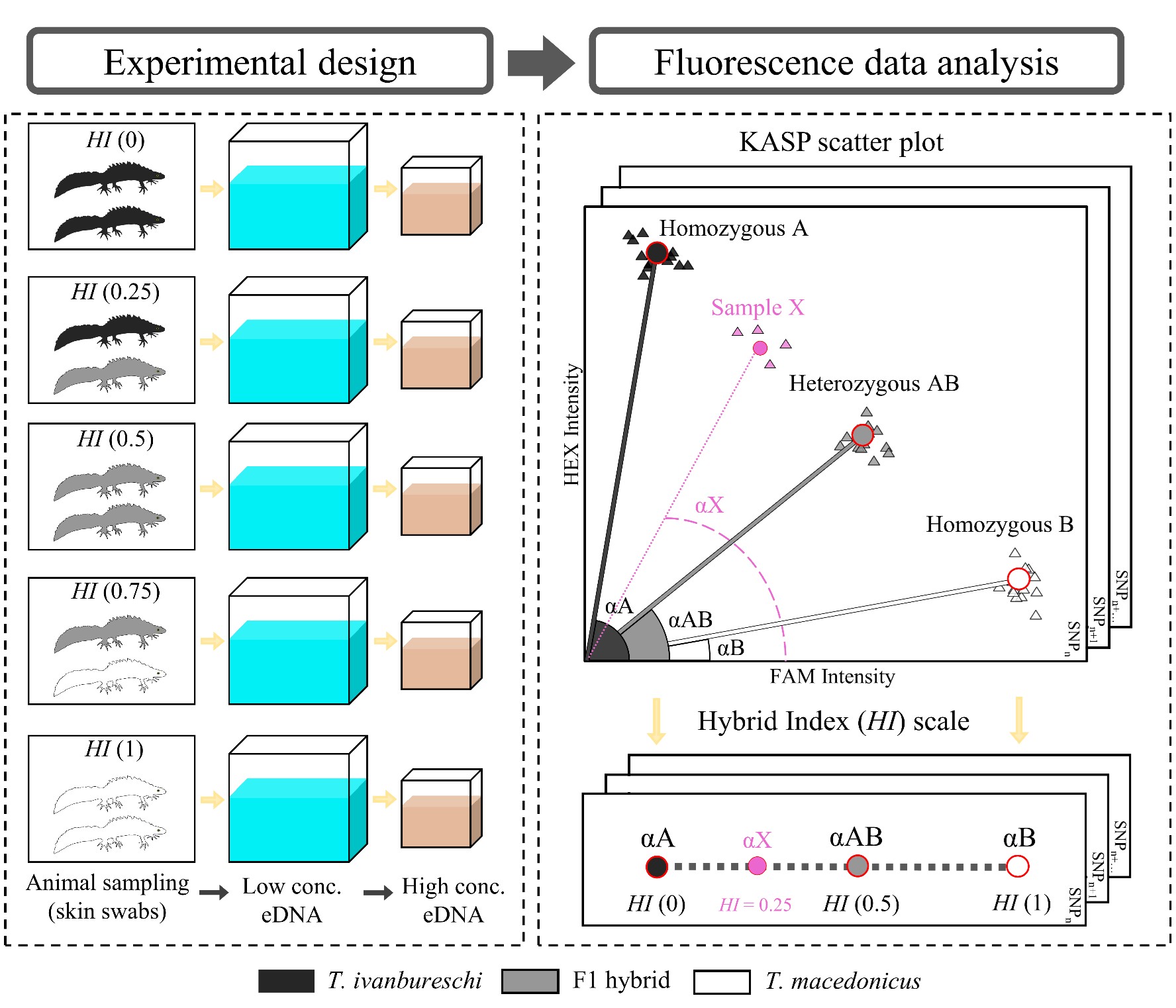
At the crested newt colony in Belgrade, Serbia, we mimicked a hybrid zone. We put individuals of different species, as well as hybrids between them, together in tanks, in different combinations. The artificial populations ran from genetically purely the one species, via different degrees of genetic admixture, to genetically purely the other species. Dani shows a strong correlation between the DNA profile of the actual newts placed together and the DNA profile obtained from water samples in the tanks. The next step is to test this in the field.
Reference: Zumel, D., Didaskalou, E., Vučić, T., Cvijanović, M., Ivanović, A., Ajduković, M., Wielstra, B., Theodoropoulos, A., Stewart, K. (2026). Hybrid horizons: Screening hybridization through nuclear environmental DNA. Molecular Ecology Resources 26(4): e70134.
This work was funded by the NWO Talent Programme Vidi Science (VI.Vidi.213.088) to Kat Stewart. The eDNA experiment was supported by the Serbian Ministry of Science, Technological Development and Innovation (grants Nos. 451-03-136/2025-03/200007, 451-03-136/2025-03/200178, 451-03-137/2025-03/200178).
Cryptic species are species that look similar – and therefore are classified as a single species, or have been so up to recently – but that have very different DNA. The alpine newt serves as a case in point. It has long been considered to comprise multiple cryptic species, but previous studies lacked the genetic resolution required to sort out the situation. In a paper led by Stephanie Koster and Anagnostis Theodoropoulos, just out in Molecular Ecology, we crack the alpine newt cryptic species complex
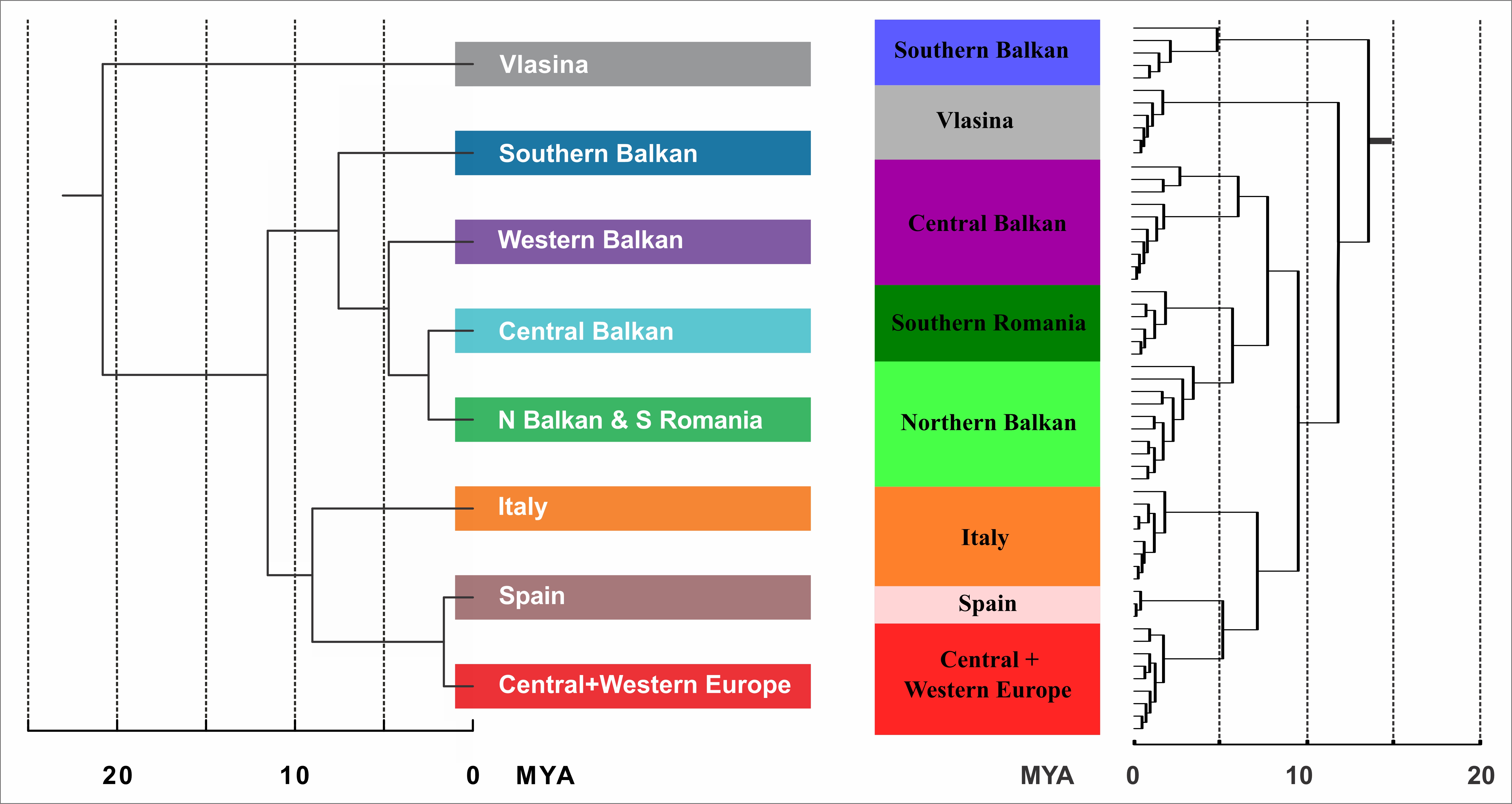
While we already knew from mitochondrial DNA (the tree on the left) that there is a lot of genetic variation in the alpine newt, genome-wide nuclear DNA (the tree on the right) was required to obtain a clear picture of the situation.
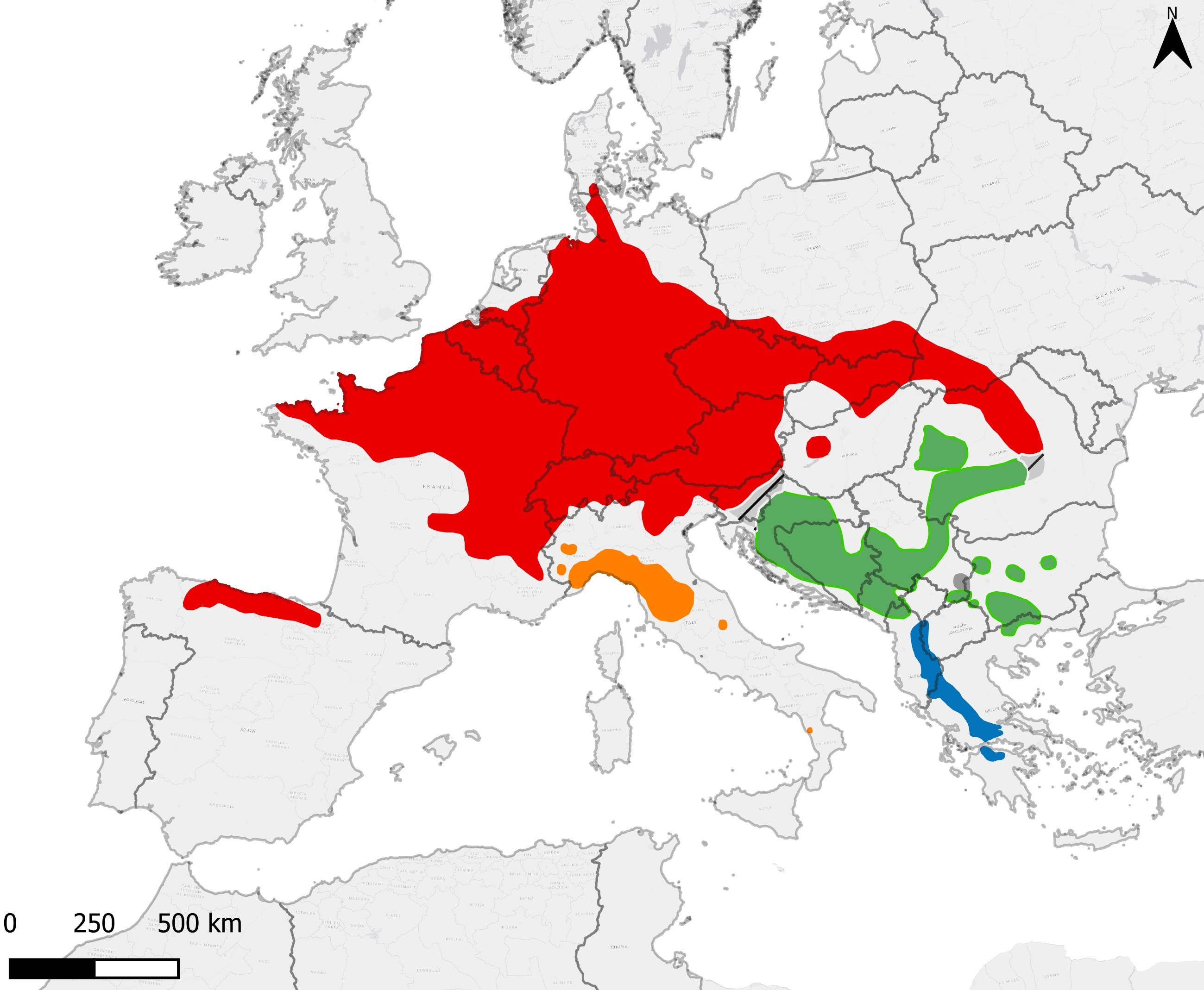
We use the NewtCap protocol to obtain the genomic context required to disentangle the intricate evolutionary history of the alpine newt. We uncover five distinct species that we call the southern alpine newt (Mesotriton veluchiensis, blue on the distribution map below), the Vlasina alpine newt (which needs a formal species description still, working on it, grey below), the Apennine alpine newt (M. apuanus, orange), the Reiser’s alpine newt (M. reiseri, green), and the Northern alpine newt (M. alpestris, red). Hopefully, by being formally recognized as distinct species, these five awesome alpine newt species can be better protected.
Distribution ranges of the five alpine newt species, see the main text for which color belongs to which species.
Reference: Koster, S., Theodoropoulos, A., Beukema, W., Ambu, J., Babik, W., Canestrelli, D., Chiocchio, A., Cogalniceanu, D., Cvijanović, M., de Visser, M.C., Dufresnes, C., France, J., Hyseni, A., Jablonski, D., Kranželić, D., Lukanov, S., Martínez-Solano, I., Naumov, B., Pabijan, M., Salvi, D., Schmidt, B., Sotiropoulos, K., Stanescu, F., Stanković, D., Šunje, E., Szabolcs, M., Vacheva, E., Vörös, J., Zimić, A., Wielstra, B. (2026). Five hidden species in a widespread European vertebrate: disentangling the alpine newt cryptic species complex through genomic phylogeography. Molecular Ecology 35(5): e70300.
Italian crested newt (Triturus carnifex, left) and Danube crested newt (T. dobrogicus) by Michael Fahrbach
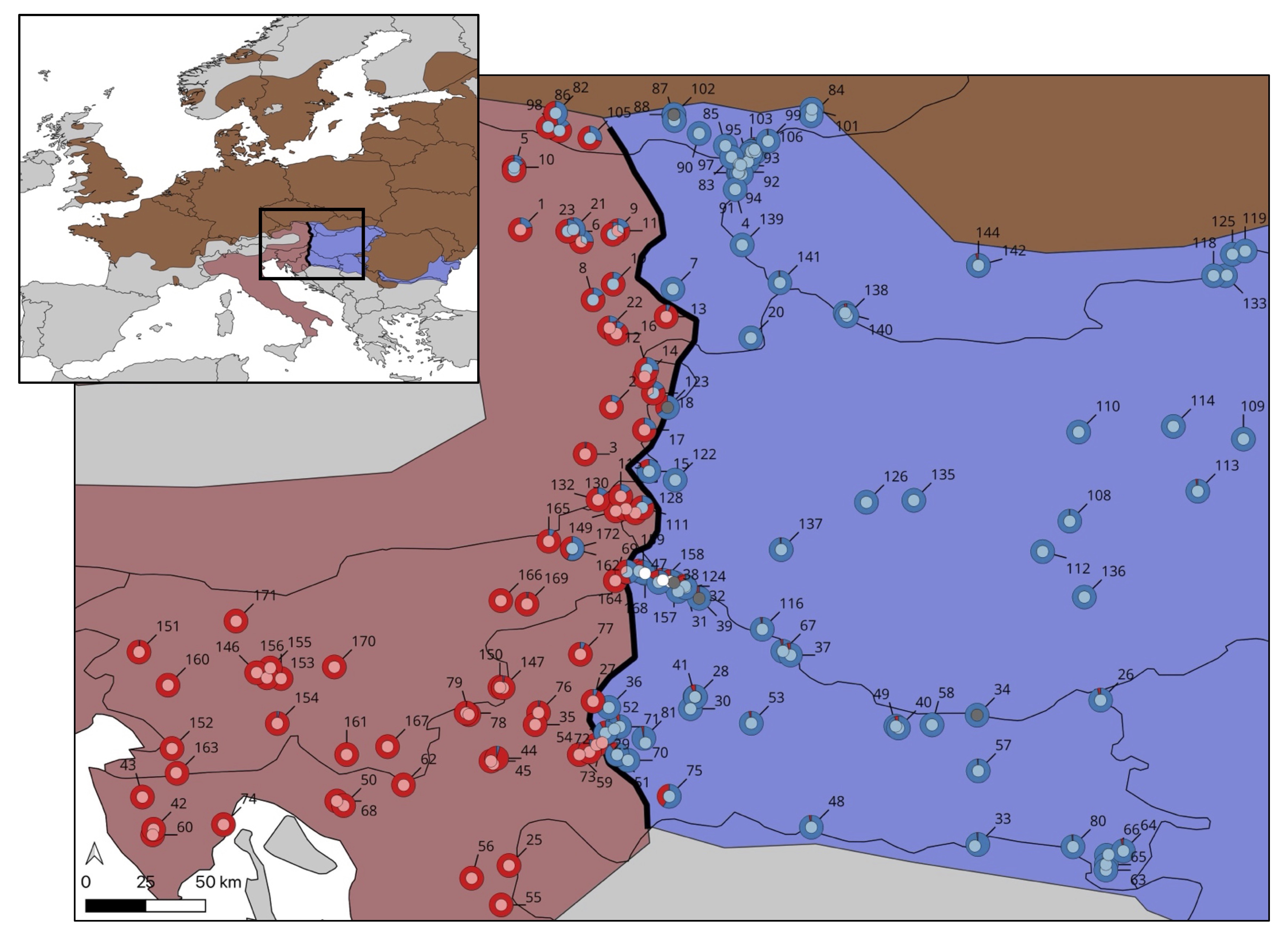
One reason that makes crested newts such a cool study system is that the species involved meet at hybrid zones. Where their ranges come into contact, they crossbreed. However, the low fitness of the hybrid offspring prevents the species from blending into one another. The consequence is a sharp transition between species distribution ranges. My previous work on crested newt hybrid zones mainly focused on Turkey and the Balkan Peninsula. Hybrid zones further north have remained poorly studied in comparison. It is time to change that!
We sample many populations and determine to which species they belong (and to what extent), based on DNA. This allows us to infer the position of the hybrid zone.
In an Amphibia-Reptilia paper led by MSc student Arilah van Eden, we use lots of DNA data to refine the position, shape and dynamics of the hybrid zone between the Danube and Italian crested newts. The hybrid zone is narrow and runs pretty much from north to south, east of the Alps. At the top we see an elevated amount of DNA derived from the Danube crested newt inside the Italian crested newt. We link this to the Italian newt moving around the Alps when glacial conditions receded after the Last Glacial Maximum. Another crested newt hybrid zone tackled!
Reference: van Eden, A.J., Theodoropoulos, A., Arntzen, J.W., Czurda, J., Kranželić, D., Mačát, Z., Mikulíček, P., Reiter, A., Schmidt, B., Stanković, D., Vek, M., Vörös, J., Wielstra, B. (2026). The position, shape and dynamics of the hybrid zone between the Danube and Italian crested newt based on genome-wide data. Amphibia-Reptilia 47(1): 79-91.
Most animals are diploid, meaning they have two copies of each chromosome. One of these copies they inherited from their mother and the other one from their father. Sometimes the number of chromosome copies differs. In a new paper out in Journal of Heredity we explore the occurrence of triploidy, where individuals have three instead of two copies of a chromosome, in the hybrid zone between crested and marbled newts. In a large set of hybrids, we find quite some newts that appear to have twice as many alleles (gene versions) of one of the parent species. We test two of these individuals with different techniques and independently confirm that they truly are triploids. Thus, triploidy is not that rare in Triturus.
Reference: Arntzen, J.W., McCartney-Melstad, E., Litvinchuk, S., Wielstra, B. (2026). Triploidy in a pair of hybridizing salamanders at the far end of the speciation continuum. Journal of Heredity 117(4): 730-739.
This project has received funding from the European Research Council (ERC) under the European Union’s Horizon 2020 research and innovation program (Grant Agreement No. 802759).
How do you determine the ratio of male and female newts in a population? You could try to sex the adults by eye. For younger animals, we now have genetic tools that can accomplish the same thing. But what if I told you, you do not even have to go through the effort of capturing animals? All the newts in a pond shed DNA into the environment. If you collect this environmental DNA, you would obtain a population-level DNA sample from which sex ratios could be inferred.
Left: the crested newt colony in Belgrade, Serbia. Right: processing environmental DNA samples (with Emilie on the left, her main supervisor Kat Stewart in the center, and Milena Cvijanović who co-manages the crested newt colony on the right).
PhD student Emilie Didaskalou demonstrates the potential of this approach in a paper in Molecular Ecology Resources. At the crested newt colony in Belgrade, Serbia, she put newts of known sex together in tanks. Emilie then took water samples and confirmed it was possible to detect if there were more or less males present compared to females from environmental DNA. Certainly this is a research avenue worthy to explore further!
Reference: Didaskalou, E.A., France, J., Cvijanović, M., Trimbos, K.B., Vučić, T., Ajduković, M., Ivanović, A., Wielstra, B., van Bodegom, P.M., Stewart, K.A. (2026). Unlocking demography: An eDNA-based toolkit to measure sex ratios from populations. Molecular Ecology Resources 26(1): e70089.
This work was funded by the NWO Talent Programme Vidi Science (VI.Vidi.213.088) to Kat Stewart. The eDNA experiment was supported by the Serbian Ministry of Science, Technological Development and Innovation (grants Nos. 451-03-136/2025-03/200007, 451-03-136/2025-03/200178, 451-03-137/2025-03/200178).
Over a decade ago, Christine Grossen and colleaguesraised an interesting hypothesis that the two versions of chromosome 1 in Triturus newts, 1A and 1B – responsible for the balanced lethal system – used to be distinct versions of a former Y chromosome. The exact scenario is too complicated to reproduce here, but suffice to say it persuaded us to test if 1A and 1B correspond to what is the Y chromosome in Lissotriton newts (the sister lineage of Triturus). In a paper out in Genome Biology and Evolution, my PhD student James France determined which chromosomes in Lissotriton newts correspond to the Y chromosome and which correspond to Triturus’ 1A and 1B. These are clearly not the same: a finding that does not bode well for Christine’s elegant hypothesis. Interestingly, the actual Y chromosomes of Lissotriton and Triturus are also not the same. This means that, on an evolutionary timescale, newts must have switched between Y chromosomes. How often has this happened? That is an exiting question to be addressed in future research.
Oh yeah, we can now also genetically determine the sex of Triturus newts, using the same approach as James previously perfected in Lissotriton newts.
The twelve chromosomes of Triturus (left) and Lissotriton compared. Green markers are linked to chromosomes 1A or 1B. Red are Y chromosome markers in Triturus and blue are Y chromosome markers in Lissotriton. As you can see, three different chromosomes are involved.
Reference: France, J., Babik, W., Cvijanović, M., Dudek, K., Ivanović, A., Vučić, T., Wielstra, B. (2025). Identification of Y-chromosome turnover in newts fails to support a sex chromosome origin for the Triturus balanced lethal system. Genome Biology and Evolution 17(9): evaf155.
This project has received funding from the European Research Council (ERC) under the European Union’s Horizon 2020 research and innovation program (Grant Agreement No. 802759) and from the Dutch Research Council – NWO (ENW‐M1 grant OCENW.M20.090). Triturus sample collection was supported by the Serbian Ministry of Science, Technological Development and Innovation (grants nos. 451-03-66/2024-01/200007, 451-03-65/2024-03/200178, 451-03-66/2024-03/200178).
Pyrenean brook salamander (Calotriton asper) by Michael Fahrbach
‘Target enrichment by sequence capture’ is a nice technique to get plenty of DNA data, for a specific, predetermined part of the genome. You just extract DNA from a sample, cut it up, label it, and then pull out your genes of interest with complementary probes. Such a genome-reduction step is particularly helpful if you study species with large and complicated genomes, such as newts. In a paper out in Ecology and Evolution, my PhD student Manon de Visser pushes the limits of the Triturus sequence capture protocol, to see how broadly it could be applied within the family of newts and true salamanders, a.k.a. the Salamandridae. Conveniently, the protocol – which we refer to as NewtCap – works across the entire family. With NewtCap, standardized data, suitable to address a wide range of questions, can be collected for any newt or true salamander.
Reference: de Visser, M.C., France, J., McCartney-Melstad, E., Bucciarelli, G., Theodoropoulos, A., Shaffer, H.B., Wielstra, B. (2025). NewtCap: an efficient target capture approach to boost genomic studies in Salamandridae (true salamanders and newts). Ecology and Evolution 15(8): e71835.
This project has received funding from the European Research Council (ERC) under the European Union’s Horizon 2020 research and innovation programme (Grant Agreement No. 802759).
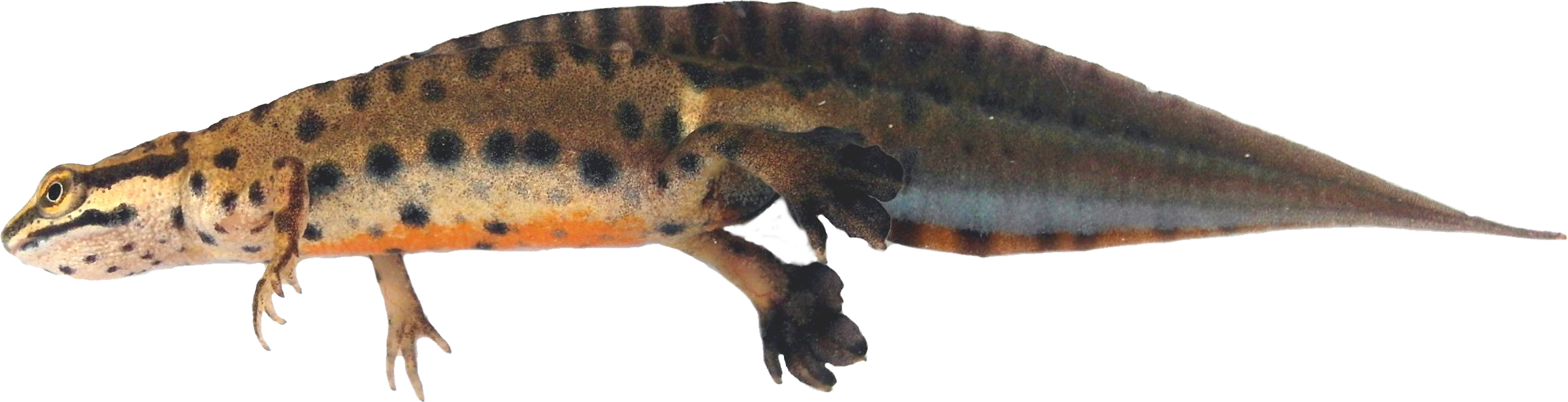
Lissotriton vulgaris meridionalis by Maceij Pabijan.
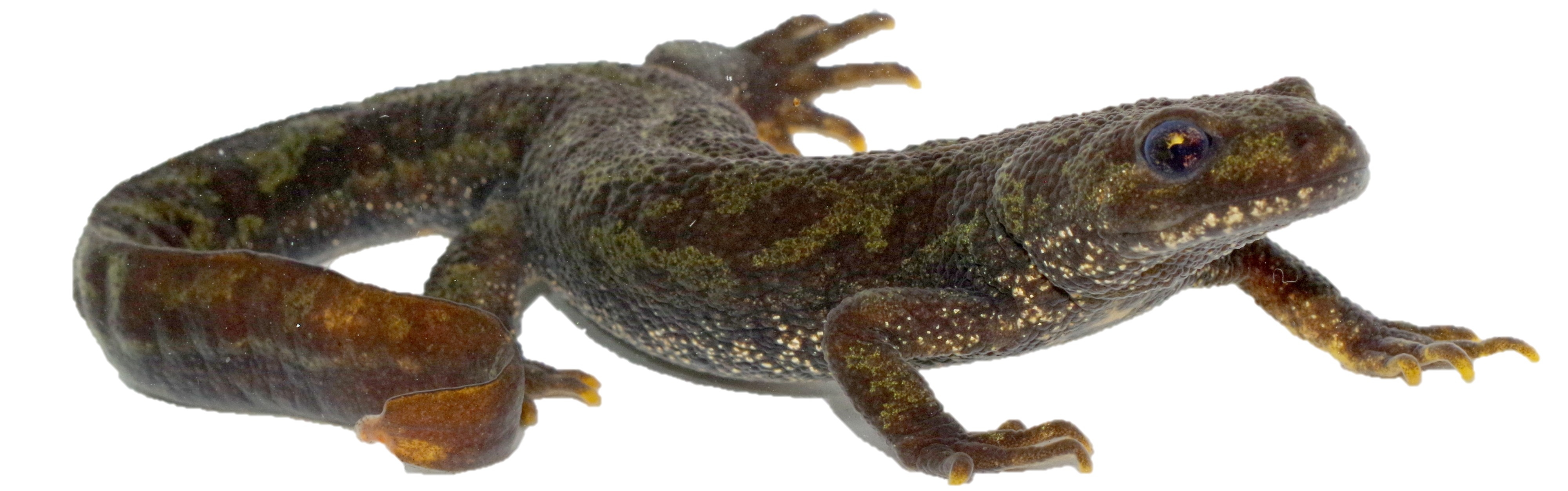
It is quite easy to tell apart males and females of the smooth newt species complex (Lissotriton vulgaris and related species) when observing adults in ponds during the breeding season. They clearly differ by their secondary sexual characteristics: males are splendidly colored and sport a crest, while females are more drab. But what about animals outside the breeding season – or juveniles, larvae and embryos? To sex these you would need to resort to genetic methods. However, this is not straightforward: while newts have huge genomes, their sex-chromosomes are hardly diverged.
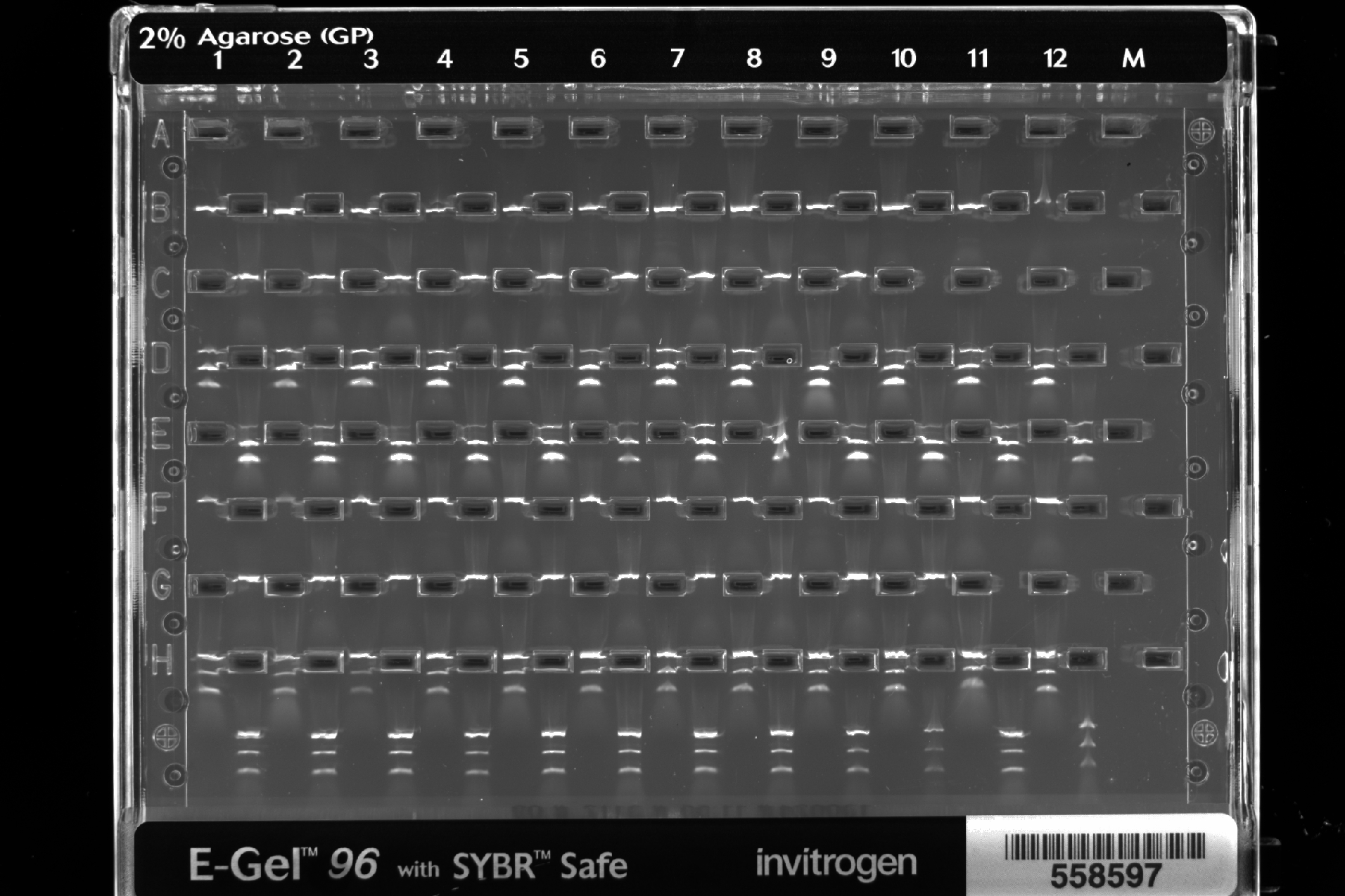
After gel electrophoresis, females only show a single control band, whereas males show two additional Y bands.
In the first paper resulting from his PhD thesis, out in Molecular Ecology Resources, my student James France undertook a massive study to design sex markers for the smooth newts. He compared two distinct ways of design: 1) looking at consistent differences in random DNA obtained from a sizable sample of males and females; and 2) looking at the distribution of DNA differences that are only present in the offspring of, in this case, the father (because in smooth newts the males have an X and a Y version of the sex chromosome). To cut a long story short: the conclusion of James’ study is that the first method works best. Based on the data collected, he designed a genetic tool that allows any member of the smooth newt species complex to be sexed. James’ approach to genetically sex salamanders should be broadly applicable.
Reference: France, J., Babik, W., Dudek, K., Marszałek, M., Wielstra, B. (2025). Linkage mapping vs Association: A comparison of two RADseq-based approaches to identify markers for homomorphic sex chromosomes in large genomes. Molecular Ecology Resources 25(7): e70019.
This project has received funding from the European Research Council (ERC) under the European Union’s Horizon 2020 research and innovation programme (Grant Agreement No. 802759).