
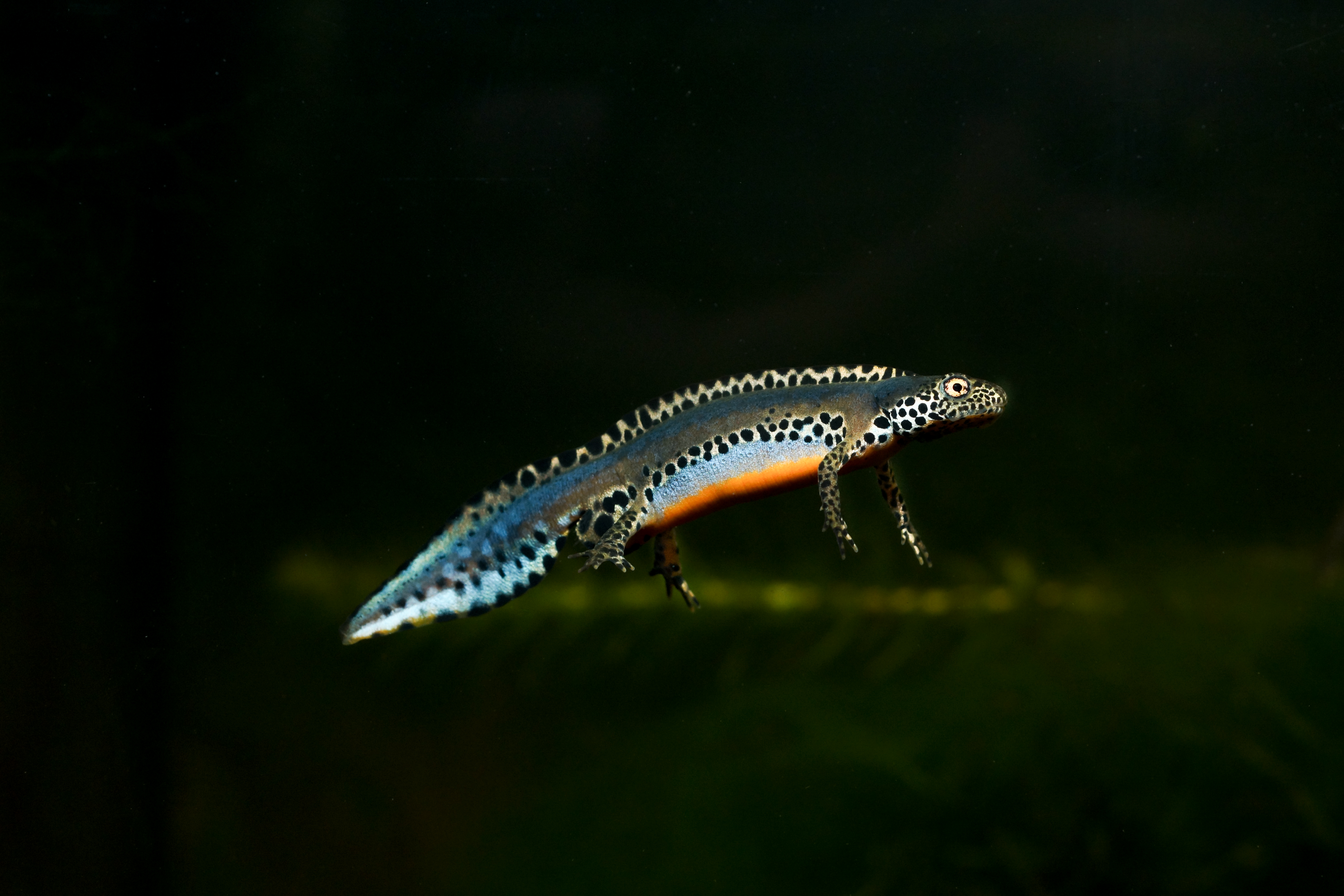
Cryptic species are species that look similar – and therefore are classified as a single species, or have been so up to recently – but that have very different DNA. The alpine newt serves as a case in point. It has long been considered to comprise multiple cryptic species, but previous studies lacked the genetic resolution required to sort out the situation. In a paper led by Stephanie Koster and Anagnostis Theodoropoulos, just out in Molecular Ecology, we crack the alpine newt cryptic species complex
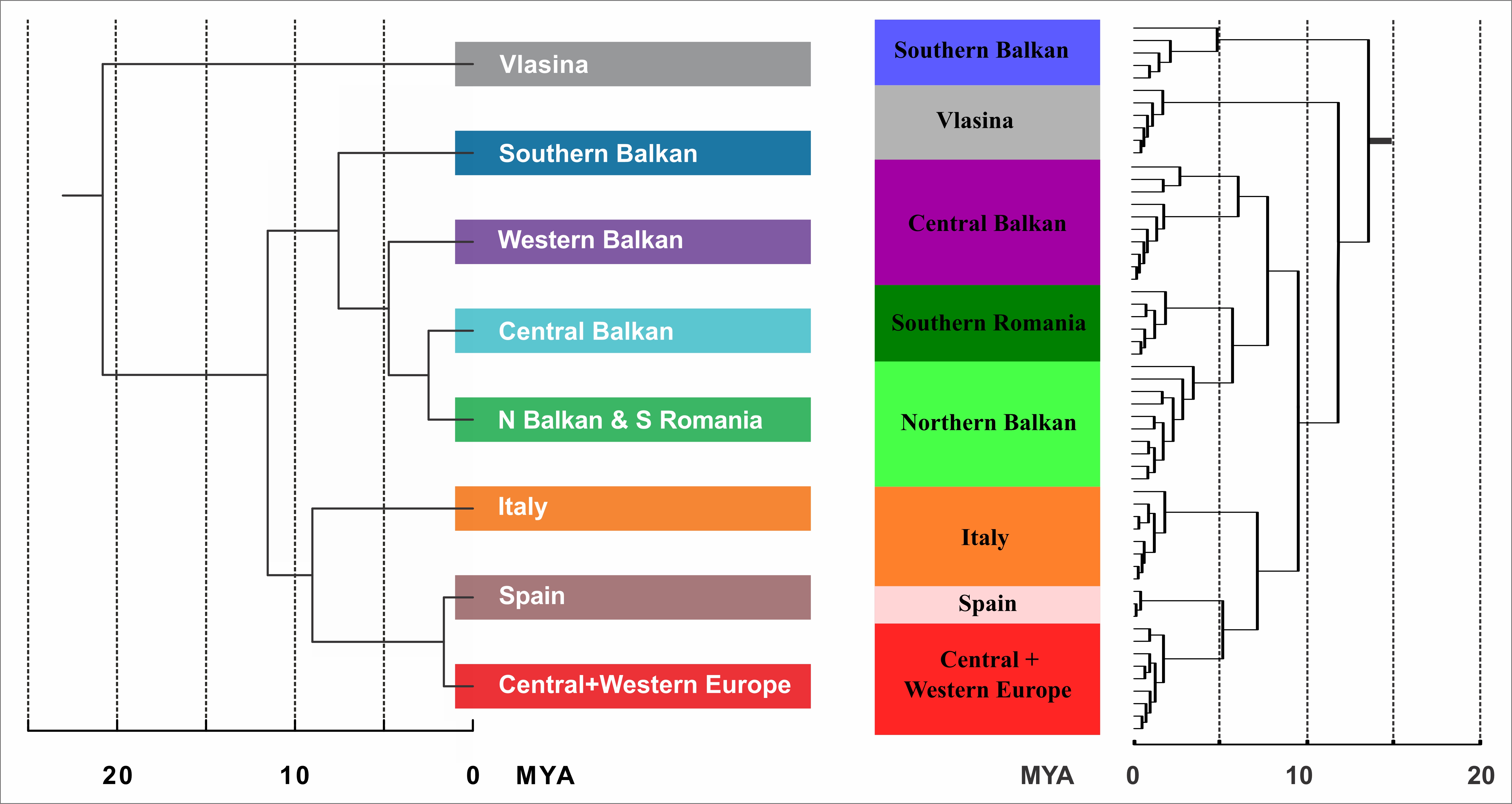
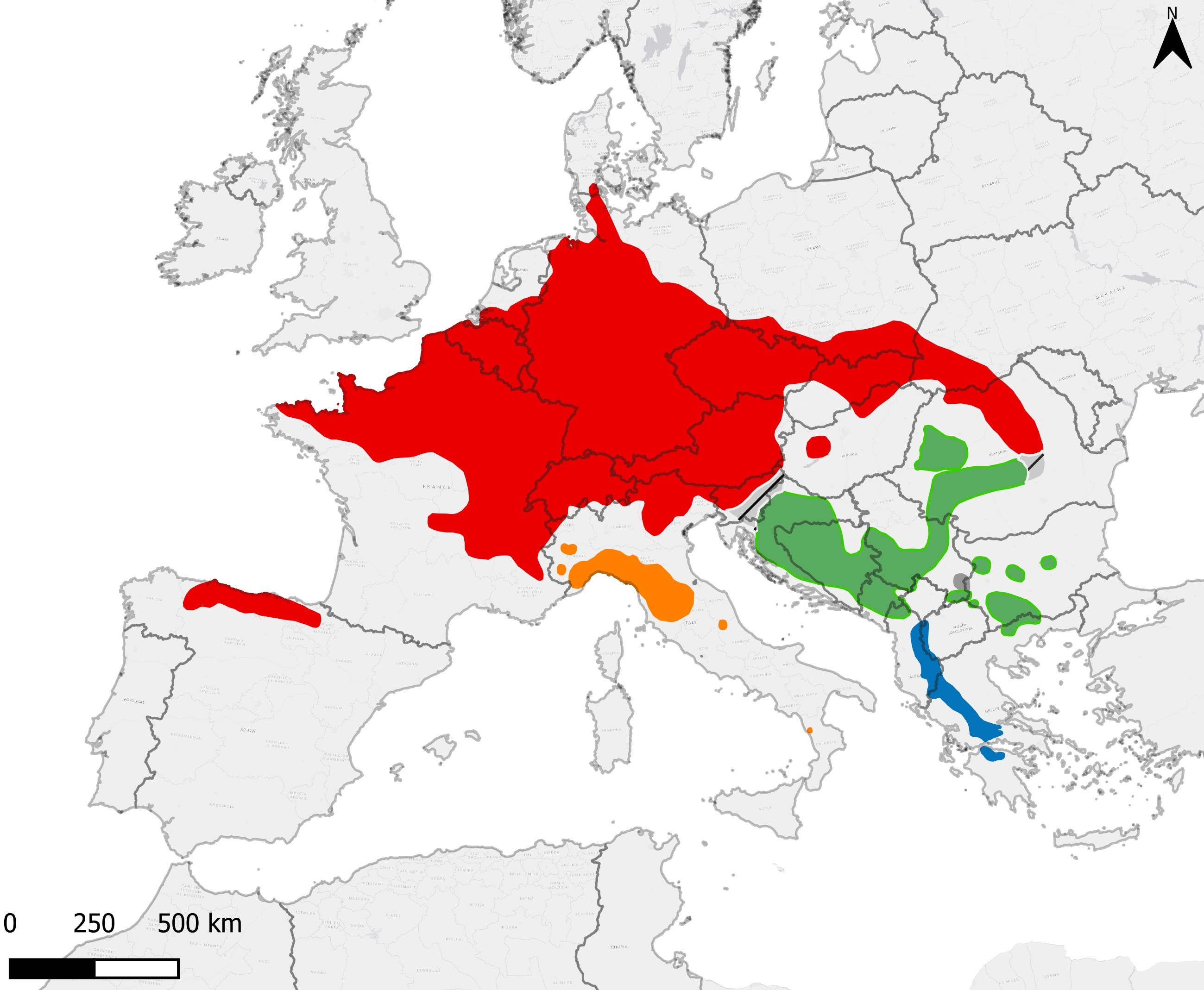
We use the NewtCap protocol to obtain the genomic context required to disentangle the intricate evolutionary history of the alpine newt. We uncover five distinct species that we call the southern alpine newt (Mesotriton veluchiensis, blue on the distribution map below), the Vlasina alpine newt (which needs a formal species description still, working on it, grey below), the Apennine alpine newt (M. apuanus, orange), the Reiser’s alpine newt (M. reiseri, green), and the Northern alpine newt (M. alpestris, red). Hopefully, by being formally recognized as distinct species, these five awesome alpine newt species can be better protected.
Reference: Koster, S., Theodoropoulos, A., Beukema, W., Ambu, J., Babik, W., Canestrelli, D., Chiocchio, A., Cogalniceanu, D., Cvijanović, M., de Visser, M.C., Dufresnes, C., France, J., Hyseni, A., Jablonski, D., Kranželić, D., Lukanov, S., Martínez-Solano, I., Naumov, B., Pabijan, M., Salvi, D., Schmidt, B., Sotiropoulos, K., Stanescu, F., Stanković, D., Šunje, E., Szabolcs, M., Vacheva, E., Vörös, J., Zimić, A., Wielstra, B. (2026). Five hidden species in a widespread European vertebrate: disentangling the alpine newt cryptic species complex through genomic phylogeography. Molecular Ecology 35(5): e70300.


 Wielstra Lab