
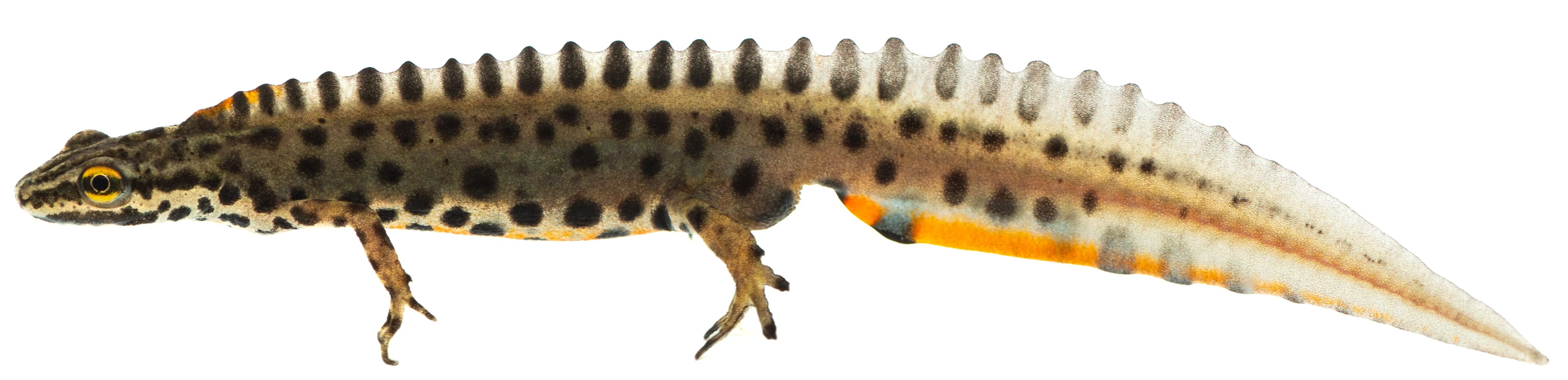
Relationships within the newt genus Lissotriton, which includes the smooth newt, have always been difficult to interpret. Similarly, the taxonomy is quite confused: it is unclear how many species there even are. In a paper led by my former MSc students Julia Mars and Stephanie Koster we use the Triturus sequence capture protocol to bring a bit of order to this chaos. We include, for the first time, all the taxa – at least the ones that we currently know of – in a single study, just out in Molecular Phylogenetics and Evolution. We show that the palmate and not the Italian newt is sister to the smooth newt species complex. We get a lot of clarity on that smooth newt species complex and we also show where gene flow distorts relationships. We confirm the species status of some smooth newt taxa and recommend others are rather treated as subspecies. The Bosca’s newt had better not be split into two species. All these insights were made possible by the Triturus sequence capture protocol!
Reference: Mars, J., Koster, S., Babik, W., France, J., Kalaentzis, K., Kazilas, C., Martínez-Solano, I., de Visser, M.C., Wielstra, B. (2025). Phylogenomics yields new systematic and taxonomical insights for Lissotriton newts, a genus with a strong legacy of introgressive hybridization. Molecular Phylogenetics and Evolution 204: 108282.


