Refining the range dynamics of the Italian crested newt

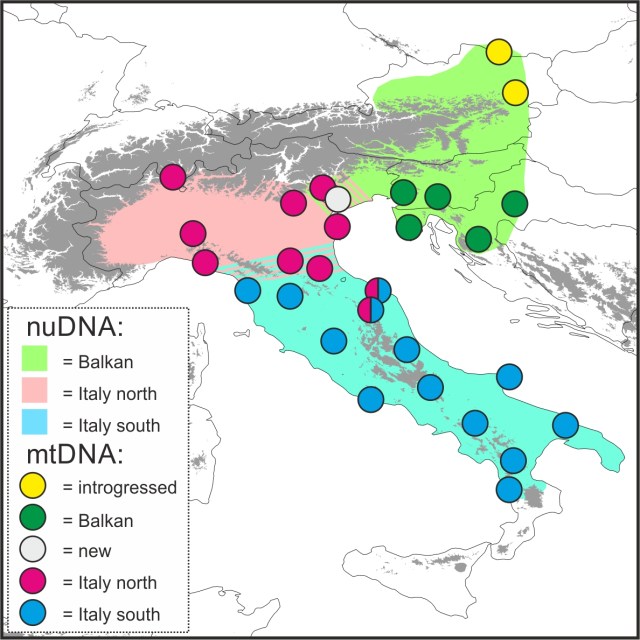
The ranges of crested newts were heavily affected by the cold-warm cycles of the Pleistocene ice age. The Italian crested newt (Triturus carnifex) is particularly interesting in this regards: it occurs in both the Balkan and Italian Peninsulas: two of the main ‘glacial refugia’ of Europe, where species managed to survive the glacial cycles (cold spells) and from which recolonization of temperate Europe was possible during interglacial cycles (warm spells). The Balkan and Italian T. carnifex populations were already known to be genetically quite distinct in their mitochondrial DNA (but that is just a single gene) and based on many markers obtained with my sequence capture protocol (but that included just a few samples).
46 Tcar map

Using a thorough sampling and my Ion Torrent protocol, we show in a new paper that the Balkan and Italian populations meet at a narrow hybrid zone in northeast Italy, suggesting that they truly have become quite distinct as they were recurrently isolated during glacials. We also confirm deep genetic divergence within the Italian Peninsula, in line with a refugia-within-refugia scenario. An earlier mitochondrial DNA study was pretty much on the mark in terms of the inferred evolutionary history of the Italian crested newt, but our new nuclear DNA results do provide a clearer picture. We show that a quite distinct mtDNA lineage occurs right in the middle of the Balkan-Italian hybrid zone. We hypothesize this might be a ‘ghost lineage’ (a distinct mitochondrial DNA lineage that does not correspond to a noticeable nuclear DNA group) that managed to survive in a local newt population that was repeatedly genetically swamped when the Balkan and Italian populations regained secondary contact. Also, we show that mitochondrial DNA from the northern Italian population has introgressed (flowed) into the southern one. We attribute this to population replacement with hybridization, with south outcompeting north.

Reference: Wielstra, B., Salvi, D., Canestrelli, D. (2021). Genetic divergence across glacial refugia despite interglacial gene flow in a crested newt. Evolutionary Biology 48(1): 17-26.
Posted in Uncategorized | Leave a comment

A solid salamander tree

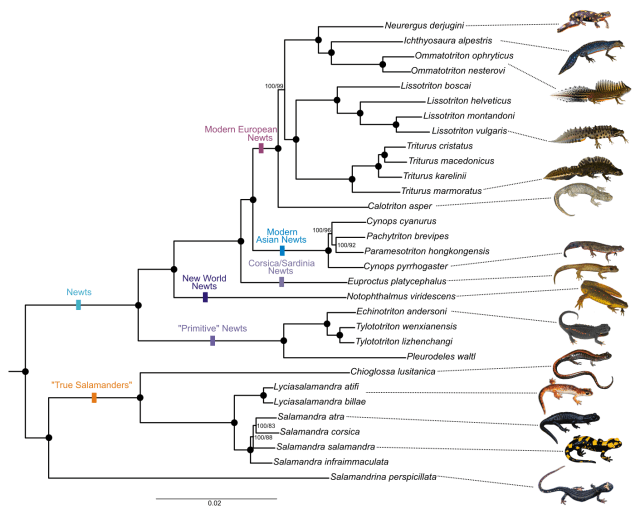
Loïs Rancilhac heads a nice salamander study that is just out in Molecular Phylogenetics and Evolution. Lots of collaborators contributed a ton of genetic data for almost all the genera that make up Salamandridae – the salamander family that includes our beloved newts. This vast dataset allowed Loïs to recover a highly supported phylogenetic tree, with some cool improvements over previous attempts. I just love that the flamboyant banded and alpine newts are each other’s closest relatives, they truly are a perfect match! However, for me the most important insight is that the smooth newts and the crested/marbled newts are recovered as sister lineages. The new Salamandridae tree will allow my lab to conduct more targeted comparative genomics in our quest to infer the evolution of the balanced lethal system in Triturus.
41 salamander treeReference: Rancilhac, L., Irisarri, I., Angelini, C., Arntzen, J.W., Babik, W., Bossuyt, F., M., Künzel, S., Lüddecke, T., Pasmans, F., Sanchez, E., Weisrock, D., Veith, M., Wielstra, B., Steinfartz, S., Hofreiter, M., Philippe, H., Vences, M. (2021). Phylotranscriptomic evidence for pervasive ancient hybridization among Old World salamanders. Molecular Phylogenetics and Evolution 155: 106967.

Posted in Uncategorized | 2 Comments

NWO Promotiebeurs voor leraren for the Wielstra lab

My first MSc student Willem Meilink has been awarded an NWO Promotiebeurs voor leraren. This will allow him to pursue his PhD in my lab, while continuing his job as a high school teacher. We know that in the balanced lethal system in Triturus two distinct forms of chromosome 1 are required for survival. Willem will use a variety of genetic techniques to test if the irrevocable loss of 50% of reproductive output, concerning the unfortunate offspring that inherit the same chromosome form from both their parents, can be explained by crucial genes simply being absent on one of the two chromosome forms.

Posted in Uncategorized | 2 Comments

Quick guide on balanced lethal systems

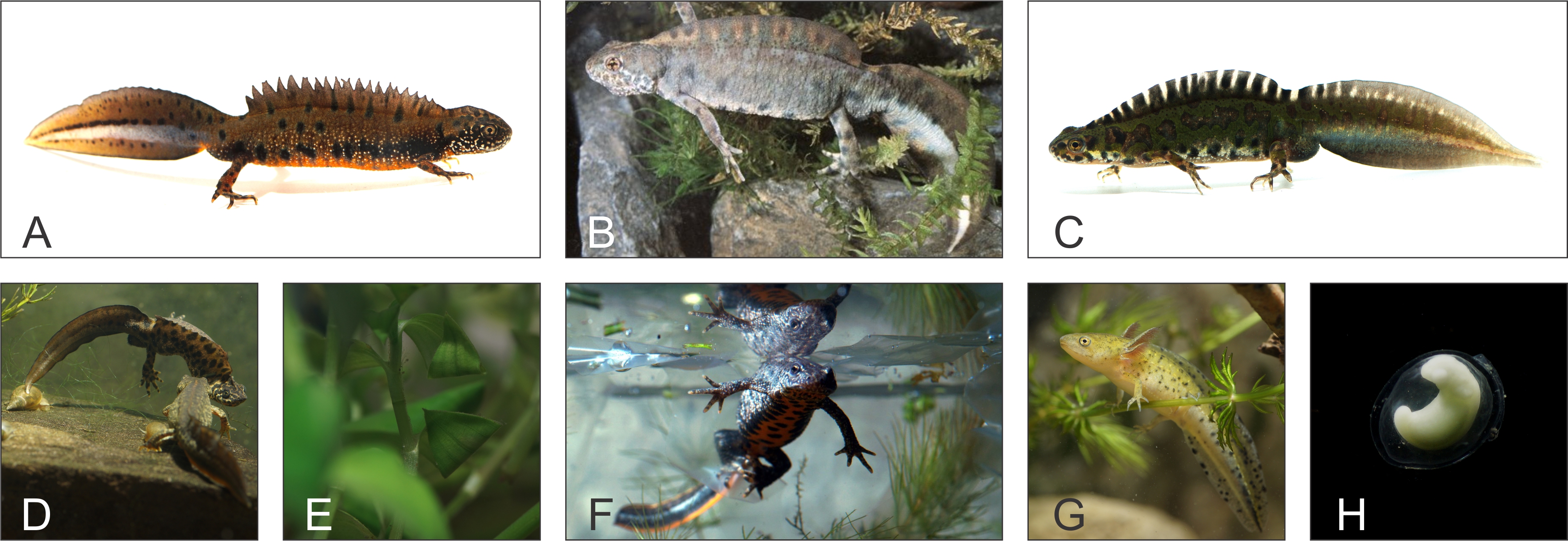
Balanced lethal systems pose an evolutionary paradox: they should not evolve because they cut reproductive output in half, yet they have done so time and again. The aim of my ERC Starting Grant project is to solve this evolutionary mystery. I give a bit of background on balanced lethal systems, summarize the main hypotheses on their origin, and outline how a combination of genomics and evolutionary modelling may provide the key to finally understanding them, in a new ‘quick guide’ published in Current Biology.

43 BLS
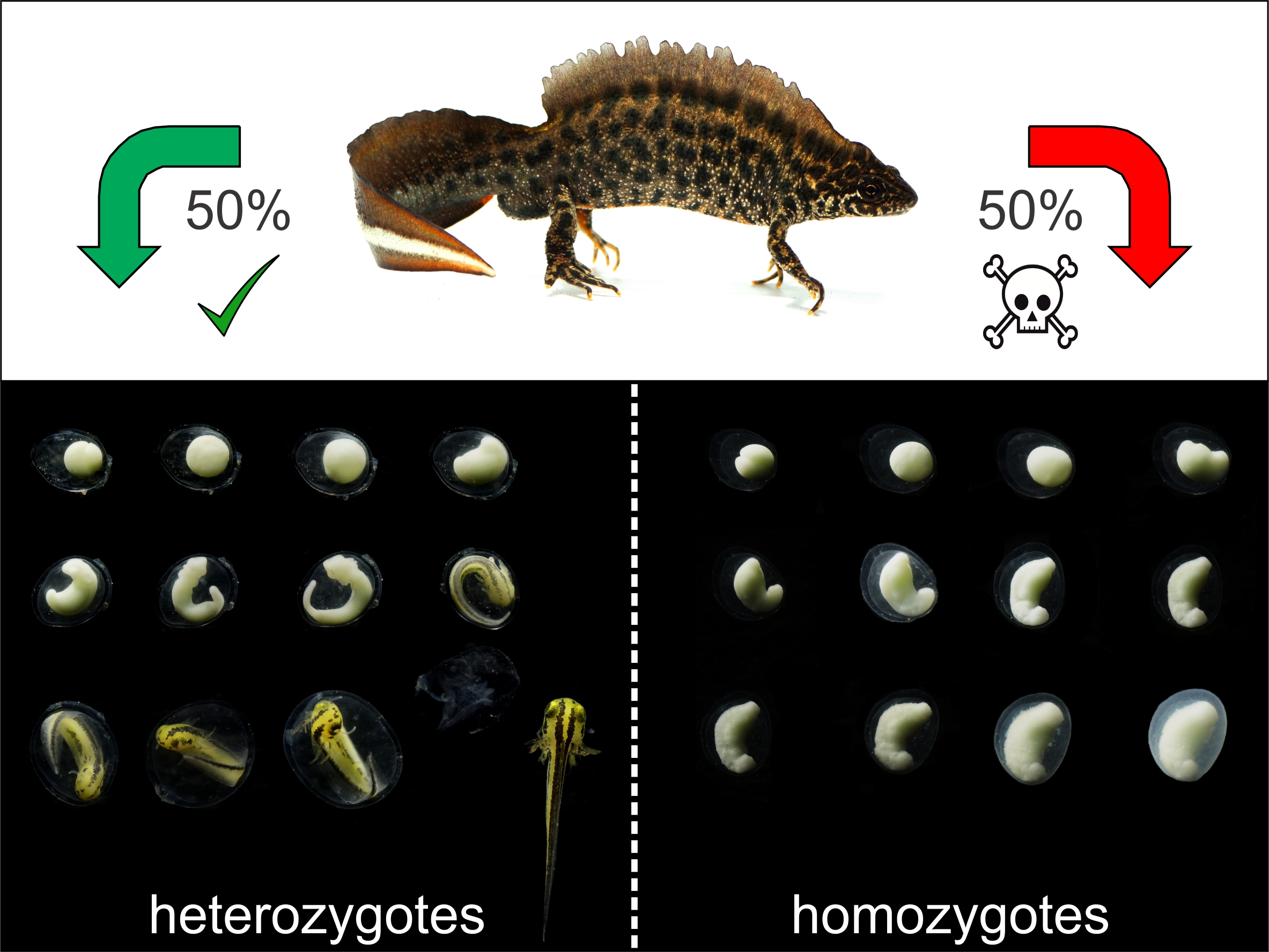
The balanced lethal system in Triturus, known as chromosome 1 syndrome, in action. Heterozygous offspring experience normal embryonic development, while homozygous offspring experience developmental arrest and die, halfway through normal embryogenesis. Hence, chromosome 1 syndrome is responsible for half of eggs laid never hatching. (Thanks to Michael Fahrbach for use of his pictures.)

Reference: Wielstra, B. (2020). Balanced lethal systems. Current Biology 30(13): R742-R743.

LOGO_ERC-FLAG_EU_

This project has received funding from the European Research Council (ERC) under the European Union’s Horizon 2020 research and innovation programme (Grant Agreement No. 802759).

Posted in Uncategorized | 4 Comments

Misleading mitochondrial DNA in a Balkan crested newt

44 Tmac
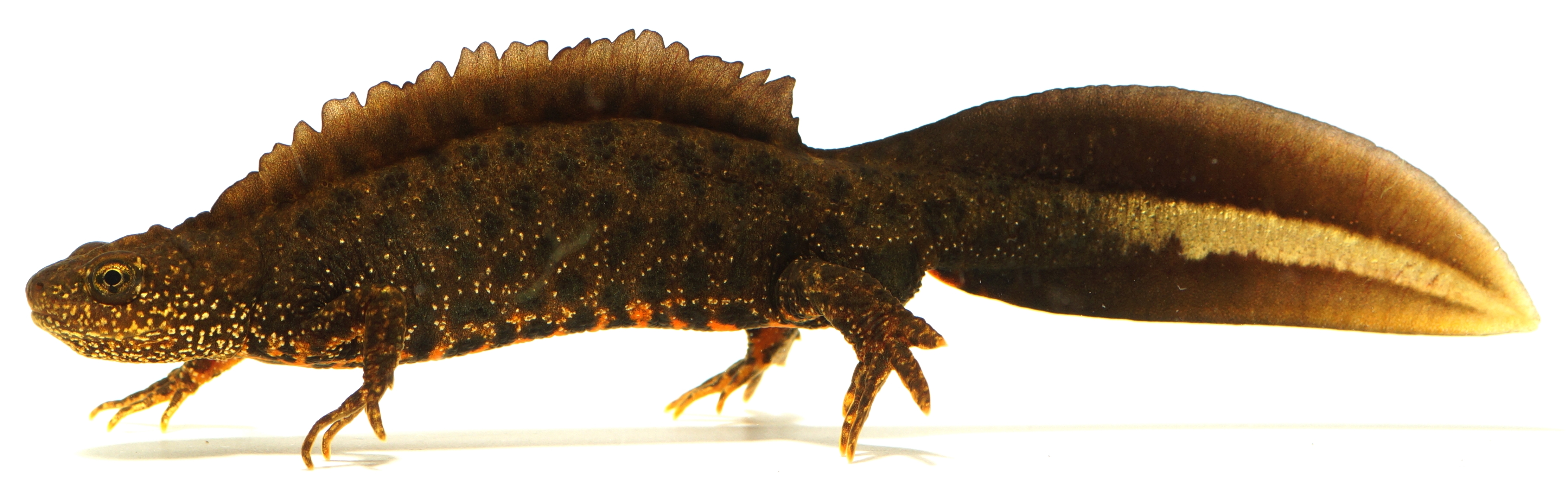
Male T. macedonicus. Picture by Michael Fahrbach.

Historical biogeographical scenarios based on DNA data have in the past mostly relied on a single genetic marker: mitochondrial DNA. As it became easier and cheaper to consult more and more nuclear DNA markers, it has become apparent that mitochondrial DNA can be misleading.

44b Tmac map
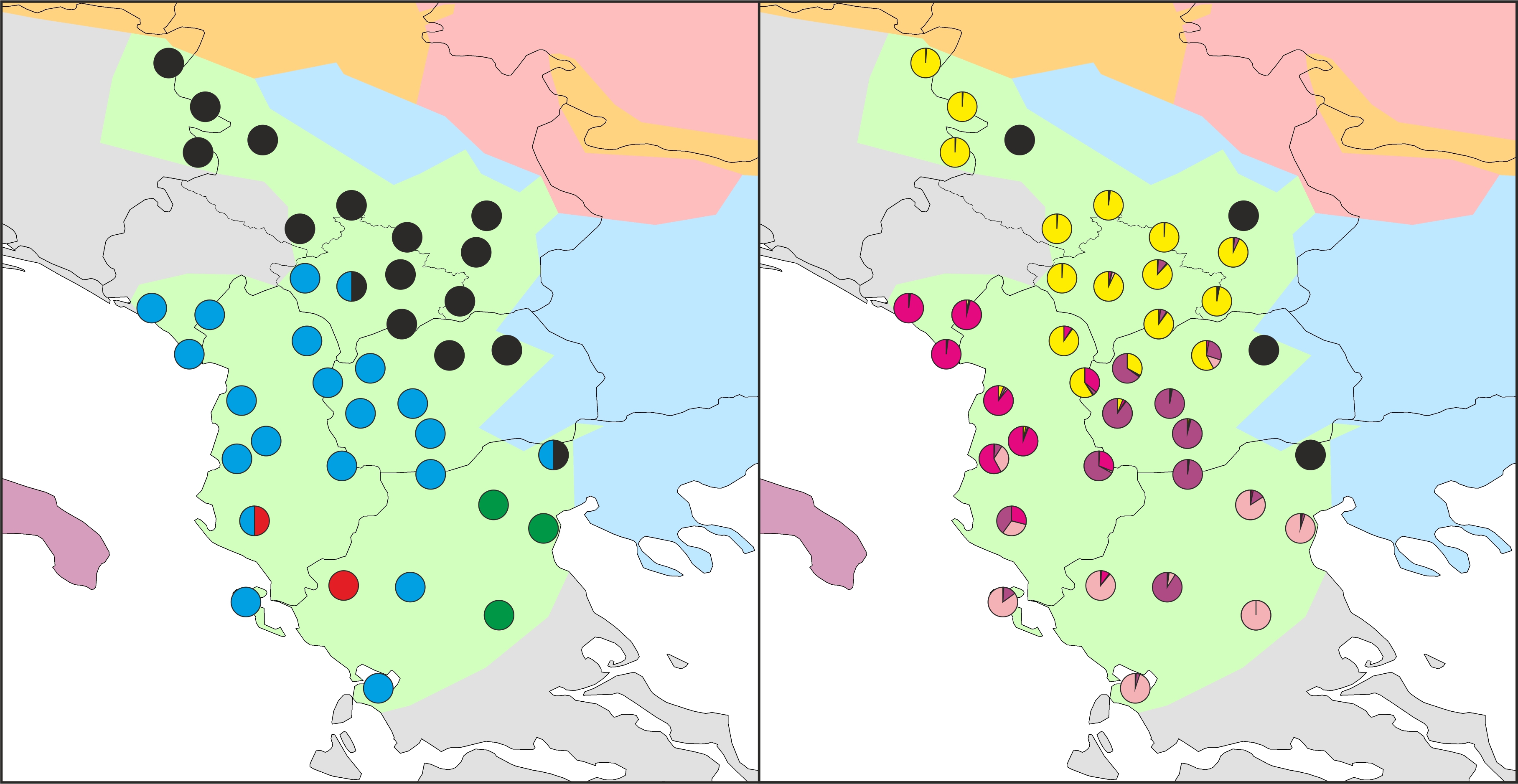
Distribution of distinct mitochondrial (left) and nuclear DNA groups in T. macedonicus.

In a paper published in the Biological Journal of the Linnean Society we show this for the Macedonian crested newt (Triturus macedonicus). These guys show the deepest intraspecific mitochondrial DNA divergence of any crested newt species. However, the distinct geographical mitochondrial DNA groups observed in T. macedonicus are not matched at all in the nuclear genome. The moral of the story: take mitochondrial DNA with a grain of salt.

Reference: Wielstra, B., Arntzen, J.W. (2020). Extensive cytonuclear discordance in a crested newt from the Balkan Peninsula glacial refugium. Biological Journal of the Linnean Society 130(3): 578-585.

Posted in Uncategorized | Leave a comment

First PhD graduated from my lab

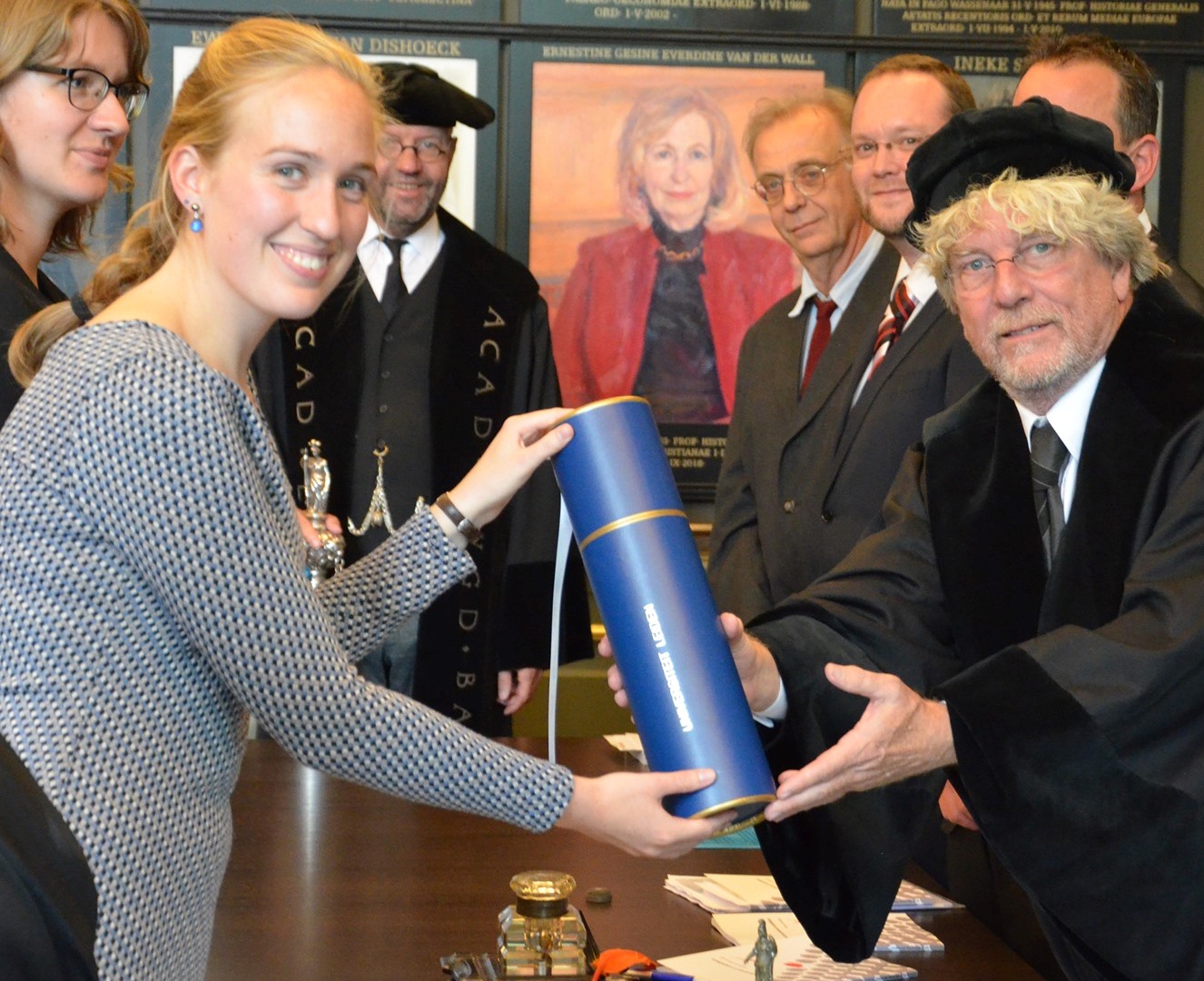
My first PhD student, Isolde van Riemsdijk, graduated on 11 September 2019. Two of Isolde’s chapters focused on banded newts (see posts here and here). Two other chapters dealt with toads and were rightfully excluded from this website (but see the papers here and here). Congratulations again!

Isolde

nwo-logo
Isolde’s project has received funding from the ‘Nederlandse organisatie voor Wetenschappelijk Onderzoek’ (NWO Open Programme 824.14.014).
Posted in Uncategorized | Leave a comment

Is historical hybrid zone movement underappreciated?

38 JBI
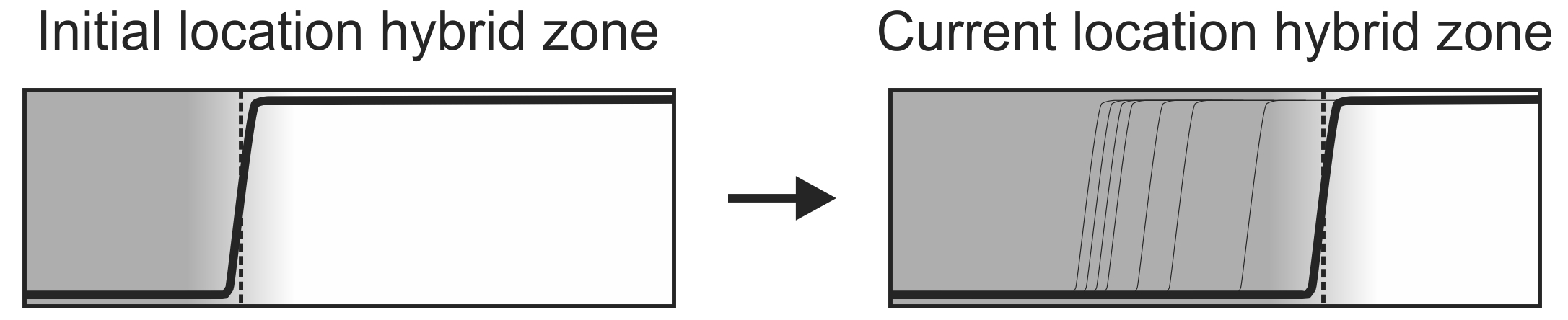
Two crested newt studies, previously highlighted here and here, support historical hybrid zone movement – movement on the scale of hundreds of kilometers and spanning multiple millennia. Before these crested newt examples, little to no empirical evidence for historical hybrid zone movement was available. Does this mean that crested newt hybrid zones are particularly dynamic? Or has the prevalence of historical hybrid zone movement in other systems simply been overlooked? In a perspective piece in Journal of Biogeography I argue the latter: historical hybrid zone movement is likely to be more common than currently appreciated.

Reference: Wielstra, B. (2019). Historical hybrid zone movement: more pervasive than appreciated? Journal of Biogeography 46(7): 1300-1305.

MSCactions

This project has received funding from the European Union’s Horizon 2020 research and innovation programme under the Marie Skłodowska-Curie grant agreement No. 655487.
Posted in Uncategorized | 2 Comments

Cracking cryptic banded newt species

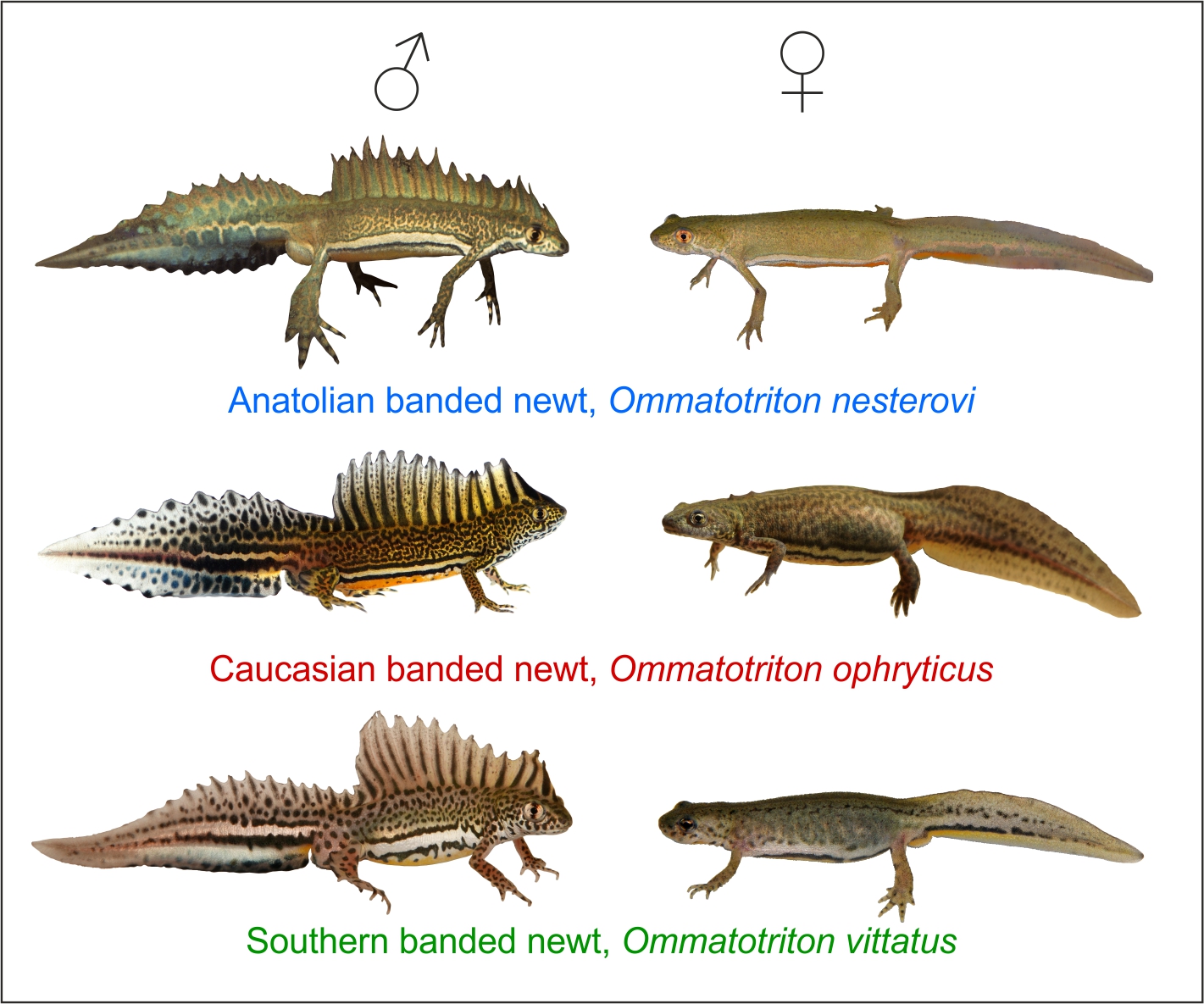
Genetic studies in the family Salamandridae have regularly revealed cryptic species – genetically distinct species that previously went unrecognized due to their morphological similarity. The most recent salamandrid example is provided by the banded newts (genus Ommatotriton). While the split between the southern banded newt (O. vittatus) versus ‘O. ophryticus’ is generally accepted, this is not the case for the further split of the latter taxon into the Caucasian banded newt (O. ophryticus sensu stricto) and the Anatolian banded newt (O. nesterovi). From morphology O. vittatus is known to be distinct, but no differences are known to separate the other two banded newt species.

38 Omma
Pictures of the three banded newt species, courtesy of Michael Fahrbach, Sergé Bogaerts, and the late Bayram Göçmen and Max Sparreboom. The vernacular names are newly proposed in this study.

Based on a superficial inspection of photographs, it seemed to me that two ‘band’ characters might be useful for species identification. Now, based on a survey of almost 700 museum specimens, we show in a paper in Salamandra that in O. nesterovi the lateral white band generally I) continues from the front limbs up to the eye and II) is interrupted by large specks on the tail, while this is generally not the case in O. ophryticus (see the figure above). In the third member of the genus, O. vittatus, both character states for each ‘band’ character occur at similar frequency, but the lateral white band is considerably broader compared to the other two species. Hence, all three banded newt species can be identified from morphology.

Reference: Üzüm, N., Avcı, A., Olgun, K., Bülbül, U., Fahrbach, M., Litvinchuk, S.N., Wielstra, B. (2019). Cracking cryptic species: external characters to distinguish two recently recognized banded newt species (Ommatotriton ophryticus and O. nesterovi). Salamandra 55(2): 131-134.

MSCactions
This project has received funding from the European Union’s Horizon 2020 research and innovation programme under the Marie Skłodowska-Curie grant agreement No. 655487.
Posted in Uncategorized | 3 Comments

Quick guide on crested and marbled newts

Triturus is great, showing intricate ritualized mating behaviour where males congregate at leks and perform elaborate dances to wow the females, representing an adaptive radiation reflecting gradients of aquaticness, providing strong support for the hypothesis of historical hybrid zone movement, and representing the best-known example of an evolutionary enigma known as a balanced lethal system – as I explain in a new ‘quick guide’ published in Current Biology.

37 quick guide
Thanks to Michael Fahrbach and Paolo Mazzei for use of their pictures in the compilation accompanying the quick guide.

Reference: Wielstra, B. (2019). Triturus newts. Current Biology 29(4): R110-R111.

MSCactions

This project has received funding from the European Union’s Horizon 2020 research and innovation programme under the Marie Skłodowska-Curie grant agreement No. 655487.
Posted in Uncategorized | Leave a comment

Finally! A resolved crested newt phylogeny

The main motivation to conduct the outgoing phase of my Marie Skłodowska-Curie fellowship at the University of California, Los Angeles was to design a ‘sequence capture by target enrichment’ pipeline for Triturus. At UCLA, Evan McCartney-Melstad and Brad Shaffer possess the necessary experience as they use this technique for their system of hybridizing tiger salamanders (genus Ambystoma). Adapting the pipeline to Triturus went superbly and the first paper based on this dataset has now been published in Molecular Phylogenetics and Evolution.

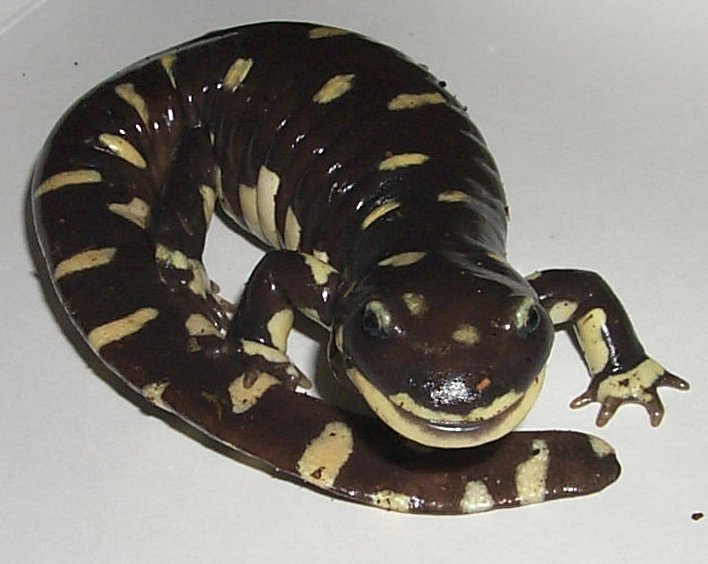
36 A. californiense curled poseCalifornia tiger salamander (Ambystoma californiense) by the Shaffer lab
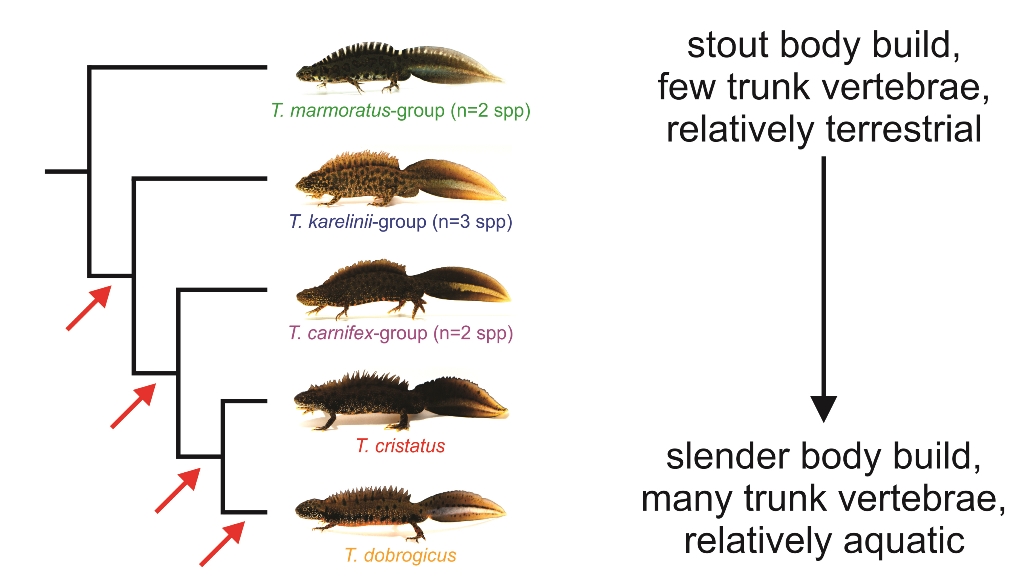
Triturus is an example of an adaptive radiation: the more slender a species’ body build, the longer its annual aquatic period. This suggests a causal relationship between body build evolution and ecological specialization. While adaptive radiations provide some of the best examples of evolution in action (think Darwin finches and cichlid fishes), the relationships between the species involved are notoriously difficult to decipher. This problem also applies to Triturus: despite several attempts, the phylogeny was hitherto unresolved, hampering our ability to retrace the eco-morphological evolution in Triturus.

36 seqcap phylogeny.jpg
The new Triturus tree (the newt pictures are by Michael Fahrbach)

With our ‘sequence capture by target enrichment’ pipeline we can sequence about 6000 DNA markers for the genus Triturus. To try and resolve the Triturus phylogeny we obtained a dataset including representatives of all marbled and crested newt species. Three distinct tree-building methods each recovered the same Triturus tree. Now we were able to place Triturus’ eco-morphological divergence into an evolutionary context: the red arrows on the Triturus tree above show inferred additions of trunk vertebrae, resulting in more slender and aquatic bodies. Our results show that the genus gradually evolved more elongated and aquatic newts. Nice!

Reference: Wielstra, B., McCartney-Melstad, E., Arntzen, J.W., Butlin, R.K., Shaffer, H.B. (2019). Phylogenomics of the adaptive radiation of Triturus newts supports gradual ecological niche expansion towards an incrementally aquatic lifestyle. Molecular Phylogenetics and Evolution 133: 120-127.

MSCactions

This project has received funding from the European Union’s Horizon 2020 research and innovation programme under the Marie Skłodowska-Curie grant agreement No. 655487.
Posted in Uncategorized | 5 Comments