The Wielstra lab at Leiden University and Naturalis

LogosIt’s official, on 1 February I will start my ERC Starting Grant project as a tenure track Assistant Professor at the Institute of Biology at Leiden University in the Netherlands. Meanwhile I will be Honorary Researcher at Naturalis Biodiversity Center. In the context of my project I will hire two PhD students and two postdocs. I expect to start advertising positons halfway 2019, so stay tuned!

ERC - Fahrbach arrest
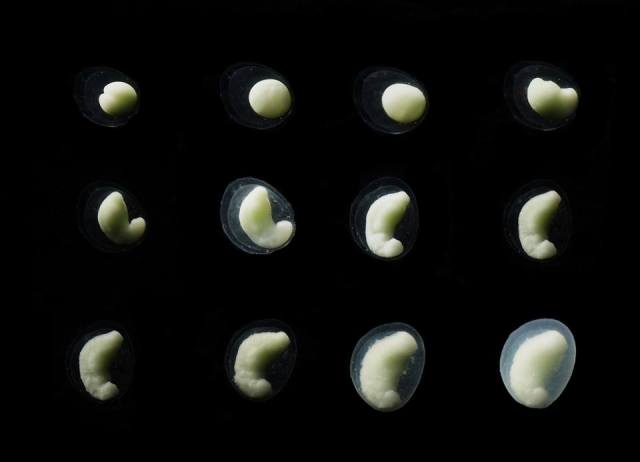
An unfortunate Triturus embryo, experiencing the arrested development that is associated with the balanced lethal system that is shared by all Triturus species, known as ‘chromosome 1 syndrome’. This picture is by Michael Fahrbach and taken from his recent book (Fahrbach & Gerlach (2018) The genus Triturus).

LOGO_ERC-FLAG_EU_

Posted in Uncategorized | Leave a comment

The complicated conservation issue of genetic pollution

car-e1537019478950.jpg
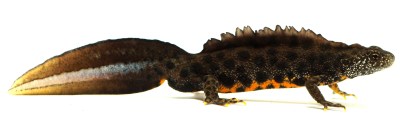
Male T. carnifex. Picture by Michael Fahrbach.

Invasive species can threaten native biota by means of competition, predation and infection. A less-known risk is genetic pollution: the (partial) replacement of local genotypes via hybridization. A particular challenge of quantifying invasive hybridization is that the closely related species involved tend to be morphologically similar. As a consequence, conservation action would depend on large scale genotyping. Addressing genetic pollution is a notoriously contentious issue with complications arising at the stage of obtaining and interpreting information.

In the context of my Marie Skłodowska-Curie fellowship I proposed a secondment at the Invasive Alien Species Team. I collaborated with the Dutch NGO RAVON (Reptile, Amphibian, and Fish Conservation Netherlands) as well. We developed a molecular toolkit that allows that allows efficient screening for genetic pollution in a Dutch case of invasive hybridization in crested newts and that could easily be adapted to other cases of invasive hybridization.

Furthermore, we summarize the state of the field and provide guidelines for establishing much-needed policy for the management of genetic pollution. There are clear parallels between the crested newt case and the work of Brad Shaffer, my outgoing host at UCLA, on tiger salamanders in California. Here the native Californian tiger salamander is threatened by invasive hybridization with the introduced barred tiger salamanders. Brad’s experience helped shape the report we wrote, which I hope can help address the complicated conservation issue of genetic pollution.

Reference: Wielstra, B., Arntzen, J.W., Butlin, R.K., van Delft, J.J.C.W., Vrieling, K., Shaffer, H.B. (2018). Molecular toolkit and guidelines for the management of genetic pollution. Reptile, Amphibian and Fish Conservation Netherlands (RAVON), Nijmegen.

newton_mc
I initiated this work as a Newton International Fellow. This project has received funding from the European Union’s Horizon 2020 research and innovation programme under the Marie Skłodowska-Curie grant agreement No. 655487.
Posted in Uncategorized | 2 Comments

ERC Starting Grant for the Wielstra lab

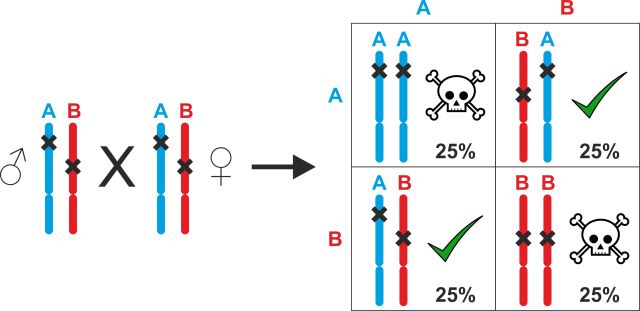
I am pleased to announce that I have been awarded an ERC Starting Grant. In this five year research program I will untangle the evolution of balanced lethal systems. Natural selection is supposed to keep lethal alleles (dysfunctional copies of crucial genes) in check. Yet, in a balanced lethal system the frequency of lethal alleles is inflated. Because two forms of a chromosome (let’s call them A and B) carry distinct lethal alleles that are reciprocally compensated for by functional genes on the alternate chromosome form, both chromosome forms – and in effect their linked lethal alleles – are required for survival (see figure below). The inability of natural selection to purge balanced lethal systems appears to defy evolutionary theory.

BLS FINAL

The most illustrious balanced lethal system is observed in Triturus newts and is known as chromosome 1 syndrome. All adult Triturus newts invariably possess two forms of chromosome 1, known as 1A and 1B. Yet, according to the rules of Mendelian inheritance, half of the offspring produced is homozygous (possessing two copies of chromosome 1A or 1B). These homozygotes die halfway embryological development – half of Triturus embryos never hatch! All we currently know about chromosome 1 syndrome derives from classical karyological studies, mainly by Herbert Macgregor and colleagues. Taking advantage of modern genetic techniques, my research team will determine the genomic basis of chromosome 1 syndrome and we will propose a new model on how these bizarre balanced lethal systems could evolve. Keep an eye out on the Wielstra lab* website for all the awesome research that will derive from my ERC Starting Grant.

LOGO_ERC-FLAG_EU_

*Yes, I am allowed to say Wielstra lab now.
Posted in Uncategorized | 12 Comments

No heterosis in hybrid newts

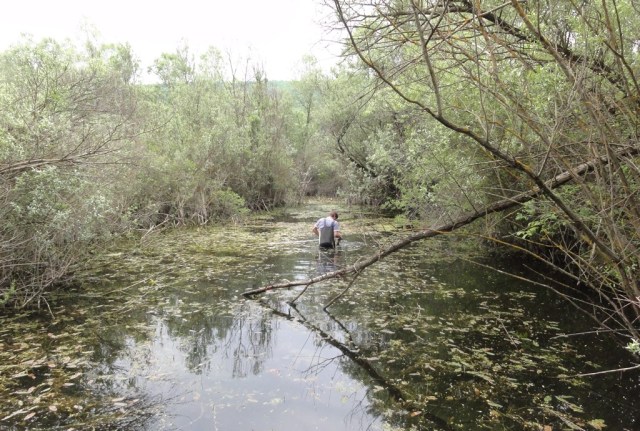
During a 2010 fieldtrip in Serbia, Jelka Crnobrnja-Isailović first introduced us to a cool pond near Vlasi, situated in the hybrid zone between T. ivanbureschi and T. macedonicus. This pond is inhabited by a big crested newt population, with individuals showing a wide range of phenotypes, running from one species to the other, and everything in between. We know that the hybrids between T. ivanbureschi and T. macedonicus are fertile: the genomic footprint of hybrid zone movement left when T. macedonicus displaced T. ivanbureschi strongly supports backcrossing between the two. In a new paper published in PeerJ we genotype a lot of individuals from Vlasi to show that the two parental species truly blend into one another here. An analysis of population demography (based on skeletochronology) shows that the size and longevity of the Vlasi hybrids do not deviate from the two parental species, which is the case for the huge, old and practically infertile hybrids between marbled and crested newts in France. Hence, we find support for the hypothesis that, at least in Triturus, fertile hybrids allocate resources to reproduction and infertile hybrids allocate resources to growth.

18 PeerJ

Reference: Arntzen, J.W., Üzüm, N., Ajduković, M., Ivanović, A., Wielstra, B. (2018). Absence of heterosis in hybrid crested newts (Triturus ivanbureschi x T. macedonicus). PeerJ 6: e5317.

newton_mc
I initiated this work as a Newton International Fellow. This project has received funding from the European Union’s Horizon 2020 research and innovation programme under the Marie Skłodowska-Curie grant agreement No. 655487.
Posted in Uncategorized | Leave a comment

Mapping the smooth newts

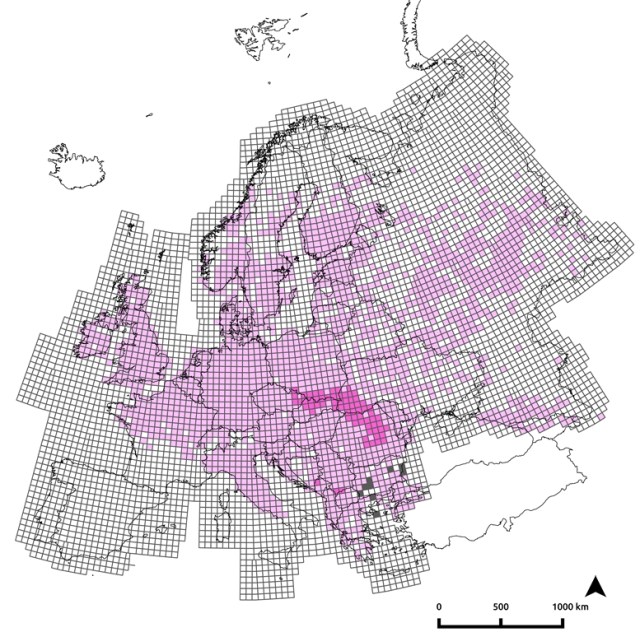
The New Atlas of Amphibians and Reptiles of Europe was published in 2014 in the journal Amphibia-Reptilia. In the new atlas, the ‘smooth newt’ and the Carpathian newt were mapped. It turns out that the original smooth newt comprises five different species and the Carpathian newt is a member of the ‘smooth newt Lissotriton vulgaris complex’. To reflect these new developments in smooth newt taxonomy, we used genetic data to approximate the ranges of all six species and compiled a smooth newt distribution database. Our work particularly focused on the Balkan Peninsula and the Carpathians, as here the different species meet in nature. In a paper published in Amphibia-Reptilia we provide atlas maps for the smooth newt complex.

16 atlas Lisso

This is an overview of all the grid cells that have smooth newt localities (with cells having more than one species colored dark rather than light purple and cells for which smooth newts are present but the exact species is unknown colored grey). Maps for the individual species are published with the paper. Note that, because our maps only cover the focus area of the new atlas, part of the ranges of some species are not shown and one species that occurs completely outside of the focal area has no map.

Reference: Wielstra, B., Canestrelli, D., Cvijanović, M., Denoel, M., Fijarczyk, A., Jablonski, D., Liana, M., Naumov, B., Olgun, K., B., Pabijan, M., Pezzarossa, A., Popgeorgiev, G., Salvi, D., Si, Y., Sillero, N., Sotiropoulos, K., Zieliński, P., Babik, W. (2018). The distributions of the six species constituting the smooth newt species complex (Lissotriton vulgaris sensu lato and L. montandoni) – an addition to the New Atlas of Amphibians and Reptiles of Europe. Amphibia-Reptilia 39(2): 252-259.

MSCactions

This project has received funding from the European Union’s Horizon 2020 research and innovation programme under the Marie Skłodowska-Curie grant agreement No. 655487.
Posted in Uncategorized | 1 Comment

Hybrid banded newts introduced in Spain

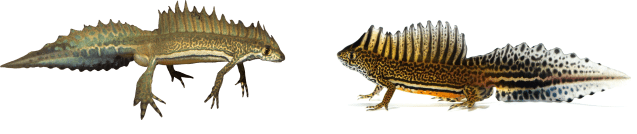
17 OmmaOmmatotriton nesterovi (left) and O. ophryticus.

The introduction of species outside their native range is worrisome from the point of view of conservation, as they can negatively impact native species. Banded newts naturally occur in the Near East. Yet, an introduced population was recently discovered in Spain. In a paper published in Conservation Genetics we identify the species involved and the geographical origin of the introduced newts. We compare the genotypes of eleven Spanish banded newts with a range-wide phylogeography of banded newts. Surprisingly, all Spanish individuals turn out to be hybrids between two different banded newt species: Ommatotriton ophryticus and O. nesterovi. The ancestors of these hybrids originated from Turkey. We argue that the hybrid nature of the Spanish banded newts makes it (even) harder to predict what their impact on native species might be.

Reference: van Riemsdijk, I., van Nieuwenhuize, L., Martínez-Solano, I., Arntzen, J.W., Wielstra, B. (2018). Molecular data reveal the hybrid nature of an introduced population of banded newts (Ommatotriton) in Spain. Conservation Genetics 19(1): 249-254.

MC NWO
This project has received funding from the European Union’s Horizon 2020 research and innovation programme (under the Marie Skłodowska-Curie grant agreement No. 655487) and the ‘Nederlandse organisatie voor Wetenschappelijk Onderzoek’ (NWO Open Programme 824.14.014).
Posted in Uncategorized | 2 Comments

A crested newt enclave predicts species replacement

Species with a very similar ecology compete with each other and in nature such species generally exclude one another. Their distribution ranges do not overlap but are adjacent to each another and meet at parapatric contact zones. The position of these contact zones is not necessarily stable. If one species has a slight competitive advantage, it would gradually replace the other species. However, this process occurs at a slow pace and hence is difficult to observe directly. In a paper published in Proceedings of the Royal Society of London B: Biological Sciences we use a crested newt case to show how past range dynamics can be inferred from present-day distribution patterns.

Species with abutting ranges sometimes show a peculiar distribution pattern, where a section of one species’ range is enveloped by that of the other. We argue that such an enclave can originate when a species is replaced by a competitor in part of its range, but endures locally while the invading species moves around and past it. Hence, an enclave can be used as an indicator of past species replacement. Several enclaves are known in Triturus newts.

18 Enclave cartoonA scenario in which an enclave is created via incomplete species replacement. A green species expands to the right and replaces a blue one. However, a relict population of blue persists locally within the green range. If the two species hybridize, a genomic footprint of hybrid zone movement would be expected in the part of the green range that was formerly occupied by the blue species (on the right side of the grey dotted line).

Because parapatrically distributed species are generally closely related, they often hybridize (and this is certainly the case in crested newts). Species replacement with hybridization equates to hybrid zone movement. Because a key prediction of hybrid zone movement is that the receding species leaves behind alleles in the species that supplants it, we can test the hypothesis that a crested newt enclave results from species replacement, by looking for a genomic footprint of hybrid zone movement.

We provide proof of concept by studying a crested newt enclave situated in Serbia. By screening dozens of genes, we uncover genetic remnants of the species inhabiting an enclave, in the range of an infringing species. This independent evidence from genetics confirms the past distribution dynamics that the enclave predicted: an expanding crested newt species intersected the range of a receding one. Our findings underline the predictive power of enclaves for inferring past species replacement.

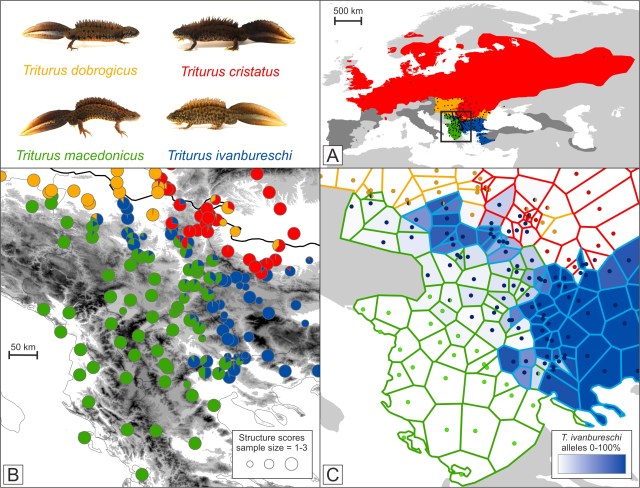
18 Enclave newts.jpgIn panel A the range of the genus Triturus is shown, with approximate outlines of the ranges of the four species under study shown in color (ranges of additional Triturus species are in dark grey). Dots are sampled localities. The box delineates part of the Balkan Peninsula, highlighted in the other panels. In panel B pie diagrams illustrate the average genetic composition per locality, with pie slices colored according to species. In panel C each polygon represents a locality and includes the area that is closest to that locality, rather than another one. The border of each polygon is colored according to the genetically dominant species. The blue shading of polygons reflects the proportion of alleles that are diagnostic for the crested newt species with the enclave (T. ivanbureschi) at that locality. Finally, the dots reflect the actual position of each locality and are colored according to the type of mitochondrial DNA present. What this admittedly rather complicated picture shows is that a blue enclave (belonging to the species T. ivanbureschi) is disconnected from the main range because the range of a green species (T. macedoncius) intervenes. In the part of the range of the green species where we expect that it replaced the blue species, we find genetic traces of that blue species, just as we predicted.

Reference: Wielstra, B., Burke, T., Butlin, R.K., Arntzen, J.W. (2017). A crested newt enclave predicts species replacement. Proceedings of the Royal Society of London B: Biological Sciences 284(1868): 20172014.

Reference: Wielstra, B., Arntzen, P. (2018). Schuivende hybridezones in kamsalamanders: hybridezones blijken beweeglijker dan gedacht. RAVON 20(4): 64-67.

newton_mc
I initiated this work as a Newton International Fellow. This project has received funding from the European Union’s Horizon 2020 research and innovation programme under the Marie Skłodowska-Curie grant agreement No. 655487.
Posted in Uncategorized | 4 Comments

Carpathian ‘refugia-within-refugia’: evidence from two newts

In Europe, the distribution ranges of many species were pushed back to the Mediterranean region during glacials, the cold phases of the Pleistocene Ice Age. While the climate in present day temperate Europe deteriorated, species managed to survive in Mediterranean refugia, where conditions remained agreeable. When the next interglacial arrived, and the climate ameliorated as is the case in the current Holocene, species could recolonize temperate Europe. It is increasingly realized that some regions north of the Mediterranean region also remained habitable for species favoring a temperate climate. Arguably, the Carpathians were the most important of these ‘northern glacial refugia’. The Carpathians did not merely allow species to weather glacial periods. Recent studies suggest that a mosaic of habitat types was present and some species may have persisted in multiple range fragments. This pattern has been well-documented for the Mediterranean region. The phrase ‘refugia-within-refugia’ was coined to describe a scenario in which species survive and diverge in multiple discrete glacial refugia.

15 Tcri Lmon.JPG

In a paper published in the Biological Journal of the Linnean Society we test whether the refugia-within-refugia scenario applies to the Carpathians for both a crested and a smooth newt species. As predicted, geographical genetic variation originated during, rather than after, the Pleistocene. Confirmation of refugia-within-refugia in these two ecologically distinct newt species suggest that the refugia-within-refugia scenario probably applies for quite some additional Carpathian species as well. Our findings emphasize the key role that the Carpathians played in Pleistocene survival and radiation of temperate Eurasia’s biodiversity.

Reference: Wielstra, B., Zieliński, P., Babik, W. (2017) The Carpathians hosted extra-Mediterranean refugia-within-refugia during the Pleistocene Ice Age: genomic evidence from two newt genera. Biological Journal of the Linnean Society 122(3): 605–613.

newton_mc
I initiated this work as a Newton International Fellow. This project has received funding from the European Union’s Horizon 2020 research and innovation programme under the Marie Skłodowska-Curie grant agreement No. 655487.
Posted in Uncategorized | 1 Comment

Biogeography of banded newts

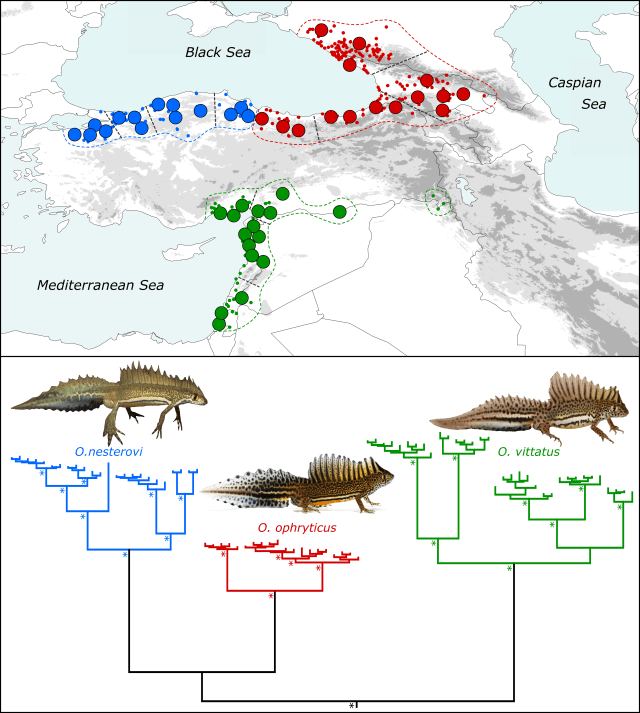
Banded newts (the genus Ommatotriton) are stunning critters. They are also distributed in a biologically fascinating, but relatively understudied region: the Near East. All the more reason to work on them, you would say. However, an in depth study on the historical biogeography of banded newts was lacking so far. There is not even consensus on how many species of banded newt there are! A banded newt phylogeography is the subject of the first paper from the thesis of my PhD student Isolde van Riemsdijk, now published in Molecular Phylogenetics and Evolution.

14

We confirm that there are three genetically distinct banded newt species, albeit relationships among these species remain unclear. One of the species, O. vittatus, is geographically completely isolated from the other two, O. nesterovi and O. ophryticus. While it seems likely that O. nesterovi and O. ophryticus meet in nature, it seems that there is little to no gene flow between the two species. The split between the three species is old, and genetic structure within species is ancient as well. The banded newt phylogeography highlights what an important region the Near East is form the perspective of biodiversity.

Reference: van Riemsdijk, I., Arntzen, J.W., Bogaerts, S., Franzen, M., Litvinchuk, S.N., Olgun, K., Wielstra, B. (2017). The Near East as a cradle of biodiversity: a phylogeography of banded newts (genus Ommatotriton) reveals extensive inter- and intraspecific genetic differentiation. Molecular Phylogenetics and Evolution 114: 73-81.

MC NWO
This project has received funding from the European Union’s Horizon 2020 research and innovation programme (under the Marie Skłodowska-Curie grant agreement No. 655487) and the ‘Nederlandse organisatie voor Wetenschappelijk Onderzoek’ (NWO Open Programme 824.14.014).


Posted in Uncategorized | 6 Comments

A genomic footprint of hybrid zone movement in crested newts

Where recently diverged species meet in nature, they often hybridize and exchange genes. The regions where this genetic intermingling occurs are called hybrid zones. If one member of a hybridizing pair of species displaces the other, their hybrid zone would in consequence move. For hybrid zones studied over decades, little shifts have occasionally been observed ‘live’. Of course a decade is next to nothing on an evolutionary time scale and over thousands of years a hybrid zone could potentially travel a considerable distance. Yet, theory predicts that moving hybrid zones quickly stabilize at barriers of less suitable habitat (so-called density troughs). So what’s the deal?

13A male crested newt from a hybrid pond.

A key prediction of hybrid zone movement is that selectively neutral genes of the displaced species introgress into the expanding one en masse, while gene flow in the opposite direction is negligible. In effect the receding species leaves behind a trail of genes within the advancing species. Such a ‘genomic footprint’ of hybrid zone movement could be uncovered by screening dozens of genes. To conduct this test of long-term movement, we had better study a hybrid zone for which a shift in position is likely to begin with. Triturus provides: we previously hypothesized that in Turkey the recently recognized T. anatolicus has been expanding at the expense of T. ivanbureschi, as their hybrid zone moved to the west. Using the Ion Torrent protocol we sampled a lot of newts from many localities throughout the range of both species.
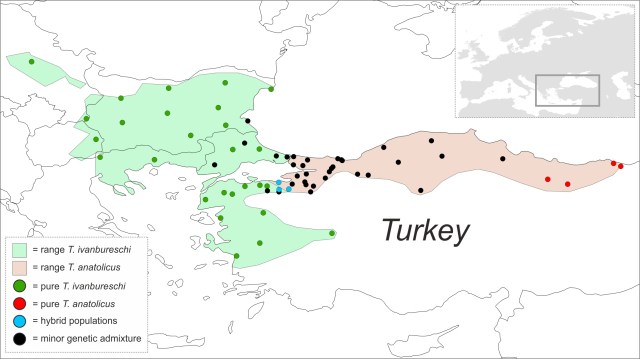
13aThe ranges of the two crested newt species are shown green and red. Pure green or red dots are populations where animals are genetically pure and the blue dots are hybrid populations (with genes of both species at high frequency). Black dots represent populations of one species where genetic traces of the other are present. Black dots are much wider distributed in the red than in the green species.

In a paper just published in the new journal Evolution Letters, we show that introgression between the two crested newt species is strongly biased. As predicted, we find considerably more genes of T. ivanbureschi in T. anatolicus then the reverse. This asymmetric introgression spans an extensive area. Our findings provide powerful evidence for a scenario in which T. anatolicus has been displacing T. ivanbureschi, while the two hybridized in the process. Theory be damned, the crested newt case strongly suggests that hybrid zone movement can proceed over considerable time and space! Hybrid zones are probably much more mobile than currently appreciated.

13bWhen plotting the fraction of genetic material derived from each species (ancestry) vs. the fraction of genes that posses a copy of either species (heterozygosity), a pure ‘green species’ would turn up in the lower left and a pure ‘red species’ in the lower right corner, while an F1 hybrid between the two species would end up in the upper corner. Plotted individuals are more widely spread in the lower right than in the lower left corner. This means that there are much more red individuals that possess some green genes, rather than the other way around.

Reference: Wielstra, B., Burke, T., Butlin, R.K., Avcıc, A., Üzüm, N., Bozkurt, E., Olgun, K., Arntzen, J.W. (2017). A genomic footprint of hybrid zone movement in crested newts. Evolution Letters 1 (2): 93-101.

Reference: Wielstra, B., Arntzen, P. (2018). Schuivende hybridezones in kamsalamanders: hybridezones blijken beweeglijker dan gedacht. RAVON 20(4): 64-67.

newton_mc
I initiated this work as a Newton International Fellow. This project has received funding from the European Union’s Horizon 2020 research and innovation programme under the Marie Skłodowska-Curie grant agreement No. 655487.
Posted in Uncategorized | 7 Comments